Can You Use Azelaic Acid with Vitamin C? The Complete Guide
You've heard that azelaic acid is a brightening powerhouse and that vitamin C is the gold standard antioxidant. You want both in your routine — but can they coexist without canceling each other out, irritating your skin, or turning your face into a chemistry experiment? The short answer is yes, they can. But the how matters more than the whether. Here's everything you need to know about pairing these two ingredients safely and effectively.
The Verdict: Yes — azelaic acid and vitamin C can be used together. They work through different, complementary mechanisms and do not cancel each other out. The real question isn't compatibility — it's tolerability. Layer them correctly, introduce them gradually, and always use sunscreen on top, and they become one of the most effective brightening duos in skincare.
Table of Contents
- What Each Ingredient Does: A 30-Second Refresher
- The pH Conflict Myth — And What Actually Happens
- The Real Risk: Irritation, Not Incompatibility
- How to Layer Them Correctly: Order, Timing & Routine
- The AM/PM Split: The Safest Approach for Most People
- Skin-Type-Specific Adjustments
- What If You Can't Tolerate Both? Smart Alternatives
- 5 Mistakes People Make When Combining These Ingredients
- Frequently Asked Questions
What Each Ingredient Does: A 30-Second Refresher
Before we get into the how of combining them, let's quickly establish the what. Understanding their mechanisms is the key to understanding why they work together — and when they might not.
| Azelaic Acid | Vitamin C (L-Ascorbic Acid) | |
|---|---|---|
| Type | Dicarboxylic acid (naturally occurring) | Water-soluble antioxidant vitamin |
| Primary Mechanism | Tyrosinase inhibition + selective cytotoxicity to abnormal melanocytes + anti-inflammatory | Tyrosinase inhibition + free radical neutralization + collagen synthesis stimulation |
| Best For | PIH, PIE, active acne, rosacea redness, all skin tones | Sunspots, dullness, photoaging, antioxidant protection |
| OTC Strength | 10% (gel, cream, or suspension) | 10–20% (serum) |
| pH Sweet Spot | ~4.5–5.0 (close to skin's natural pH) | ~3.5 (requires acidic pH for optimal stability and penetration) |
| Side Effects | Temporary itching, tingling, possible mild dryness | Stinging on application, possible oxidation (browning) |
| Photosensitivity | Mild — SPF still required | None — actually boosts SPF protection (synergistic) |
Key Insight: Both ingredients inhibit tyrosinase — the enzyme that produces melanin — but through slightly different pathways. Azelaic acid additionally suppresses abnormal melanocytes directly and calms inflammation. Vitamin C adds antioxidant protection against UV-generated free radicals. This complementary action is exactly why they make a powerful team — you're attacking hyperpigmentation from multiple angles simultaneously.

The pH Conflict Myth — And What Actually Happens
If you've been researching whether these two ingredients can be used together, you've almost certainly encountered the "pH incompatibility" argument. It goes like this: vitamin C requires a low pH (~3.5) to work, but azelaic acid works best near the skin's natural pH (~4.5–5.0), so applying vitamin C first "lowers the pH too much" for azelaic acid, or azelaic acid "raises the pH" and neutralizes the vitamin C. Here's why that argument doesn't hold up in practice.
The Science, Simplified
When you apply a vitamin C serum at pH ~3.5 to your skin, the pH at the skin's surface temporarily drops — but it begins rising back toward ~5.5 within minutes as the product absorbs and your skin's natural buffering systems kick in. By the time you apply azelaic acid 60 seconds later, the surface pH has already shifted significantly. And here's the crucial detail: azelaic acid's mechanism of action does not depend on a narrow pH window the way L-ascorbic acid's does. It inhibits tyrosinase and suppresses abnormal melanocytes across a broad pH range — meaning the temporary pH environment created by your vitamin C doesn't meaningfully compromise its efficacy.
Multiple clinical studies on azelaic acid formulations — including the 15% Finacea gel and various 10% OTC products — demonstrate efficacy across pH ranges from 4.0 to 5.5. The ingredient simply isn't as pH-sensitive as its reputation suggests.
The Real Risk: Irritation, Not Incompatibility
If the pH argument is mostly a myth, what should you actually worry about? Cumulative irritation — and how to manage it.
Both azelaic acid and vitamin C can cause stinging, tingling, or redness when first introduced to a routine. Azelaic acid is famous for its temporary itching sensation during the first 1–3 weeks of use. Vitamin C at 15–20% L-ascorbic acid can tingle or sting, especially on broken or compromised skin.
When you layer them back-to-back, you're exposing your skin to two potentially sensitizing ingredients in rapid succession. The risk isn't that they chemically react with each other — it's that your skin's barrier gets overwhelmed by the combined sensory impact.
Azelaic Acid
Irritation potential — low to moderate. Transient itching is common but harmless.
Vitamin C
Irritation potential — moderate. Stinging on application, especially at 15%+.
Combined
Cumulative sensory impact — can feel intense if skin isn't acclimated. Manageable with gradual introduction.

How to Layer Them Correctly: Order, Timing & Routine
The order of application is one of the most Googled questions about this ingredient pair — and the answer depends on whether you're using them in the same routine or splitting them across AM and PM.
Option 1: Same Routine (Morning)
If you want to use both in the morning — which is perfectly valid, since vitamin C boosts sunscreen protection and azelaic acid helps control daytime oil and inflammation — follow this order:
AM Routine: Azelaic Acid + Vitamin C Together
- Gentle cleanser — no actives, no harsh surfactants
- Vitamin C serum — apply to clean, dry skin. Pat gently, don't rub aggressively
- Wait 60 seconds — this is non-negotiable. Give it time to absorb and let your skin's pH begin to normalize
- Azelaic acid — a pea-sized amount, spread evenly
- Moisturizer — something with ceramides or peptides to support barrier integrity
- SPF 30+ — the most important step. Both ingredients make your skin slightly more sun-sensitive
Why Vitamin C First?
Vitamin C serums are almost always thinner and more water-based than azelaic acid formulations (which tend to be creamy, silicone-based gels). The general layering rule is thinnest to thickest — and in this case, the rule holds. Additionally, giving vitamin C first access to clean skin maximizes its pH-dependent absorption before you introduce anything on top.
Option 2: The AM/PM Split (Recommended for Most People)
This is the approach dermatologists most commonly recommend — not because the ingredients chemically conflict, but because it's gentler and maximizes each ingredient's unique benefits:
AM: Vitamin C Focus
- Gentle cleanser
- Vitamin C serum — antioxidant shield against daytime free radicals
- Moisturizer
- SPF 30+
PM: Azelaic Acid Focus
- Oil-based cleansing balm — removes SPF and impurities
- Water-based cleanser
- Azelaic acid — works overnight on melanocytes and inflammation
- Moisturizer
Why This Works: Vitamin C in the morning provides antioxidant protection when you need it most — during daylight UV exposure. Azelaic acid at night works on pigment production during your skin's repair cycle, free from UV interference. You're still getting both ingredients' brightening benefits, just staggered across 24 hours for maximum tolerability.
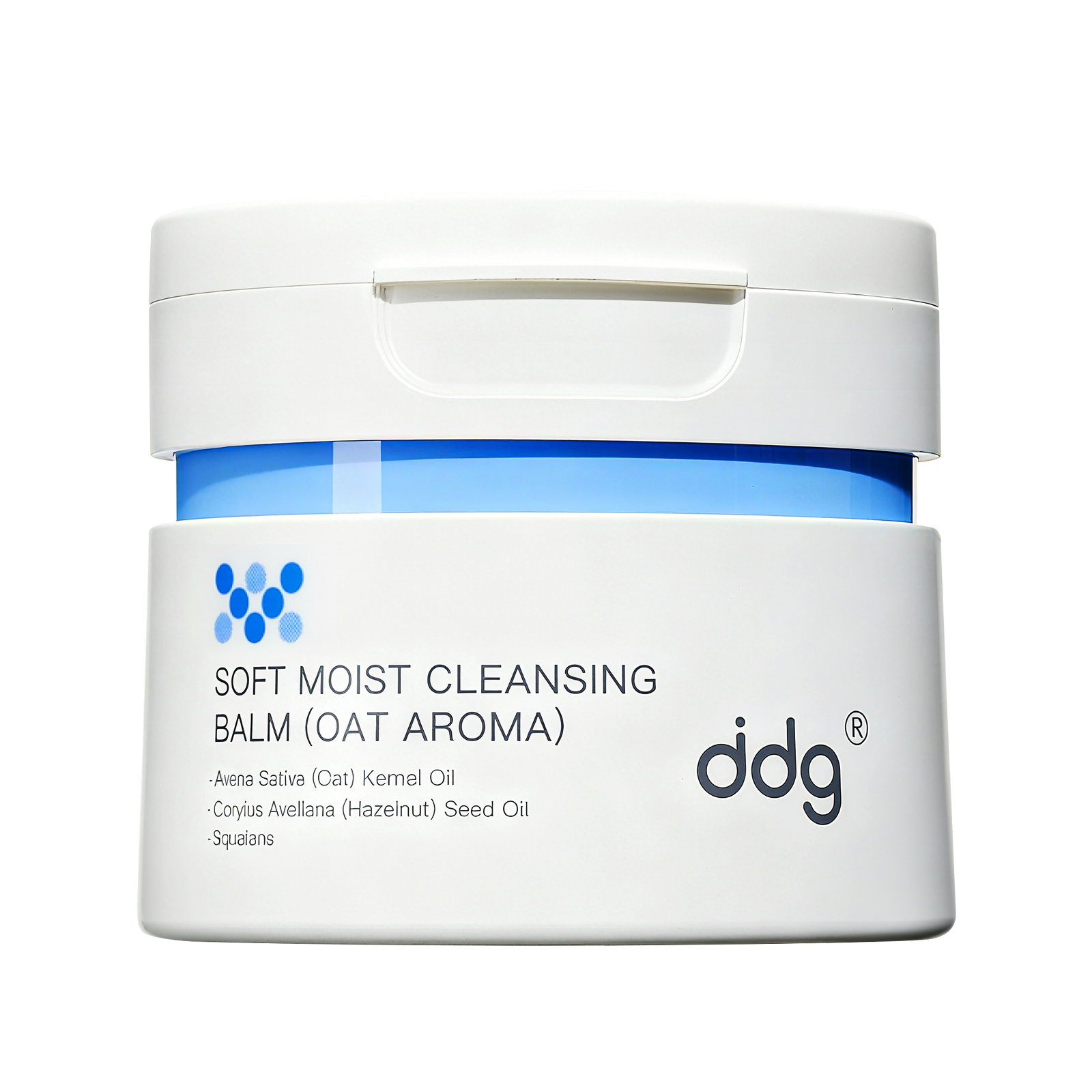
ddg Makeup Remover Cleansing Balm
A barrier-friendly first cleanse that removes SPF without stripping — essential when using active ingredients
- Oat Kernel Oil + Squalane — melts sunscreen and impurities while protecting your barrier
- 15-second transformation from balm to oil to milk — no tugging, no residue
- Magnetic spatula keeps the jar contamination-free between uses
Skin-Type-Specific Adjustments
Normal / Combination Skin
You have the most flexibility. Start with the AM/PM split (vitamin C AM, azelaic acid PM) for the first 2 weeks. If your skin tolerates both well individually, try combining them in the morning routine (with the 60-second wait and SPF). Most combination skin types can handle the combined AM routine within 3–4 weeks.
Oily / Acne-Prone Skin
Azelaic acid should be your primary active — it treats acne and hyperpigmentation simultaneously. Use it morning and night if your skin tolerates it. Add vitamin C in the morning on top of azelaic acid (reverse order: azelaic acid → wait 60s → vitamin C → moisturizer → SPF). Yes, reverse — for oily skin, the anti-inflammatory effect of azelaic acid first can actually reduce the stinging that vitamin C might otherwise cause. Gel-based azelaic acid formulations tend to layer better under thin vitamin C serums for oily skin types.
Dry / Dehydrated Skin
Stick with the AM/PM split indefinitely. Your barrier already works harder to retain moisture — don't challenge it with two actives at once. Apply moisturizer before azelaic acid at night (the "buffer" technique). Consider switching from pure L-ascorbic acid to a gentler vitamin C derivative like sodium ascorbyl phosphate or ascorbyl glucoside, which are effective at higher pH and cause less stinging.
Sensitive / Rosacea-Prone Skin
Introduce azelaic acid first, alone, for 2–3 weeks before even thinking about vitamin C. Azelaic acid is actually FDA-approved for rosacea, so it's likely to be well-tolerated — but you need to confirm that before adding another active. When you do introduce vitamin C, start with a 10% concentration (not 15–20%), use it only in the morning, and never on the same day as azelaic acid for the first month. If any stinging persists beyond week 2, azelaic acid alone is still an excellent brightening treatment — don't feel pressured to force both.
| Skin Type | Recommended Approach | Vitamin C Strength | Frequency (First Month) |
|---|---|---|---|
| Normal / Combination | AM/PM split → combined AM after 2 weeks | 15–20% L-AA | Daily |
| Oily / Acne-Prone | Azelaic acid AM+PM, vitamin C AM only | 10–15% L-AA | AzA daily, VC every other AM |
| Dry / Dehydrated | AM/PM split, buffer with moisturizer | 10% L-AA or derivative | 3–4x per week each |
| Sensitive / Rosacea | Azelaic acid only for 3 weeks → add VC AM only | 10% L-AA or derivative | AzA 3x/wk → daily; VC 2x/wk |
What If You Can't Tolerate Both? Smart Alternatives
Not every skin type needs both azelaic acid and vitamin C. If your skin rejects the combination — persistent stinging, redness, or barrier distress despite careful introduction — here are science-backed alternatives that deliver comparable results through different, gentler pathways:
If Vitamin C Is the Problem
- Niacinamide + Azelaic Acid — This is the gentlest brightening duo available. Niacinamide blocks melanosome transfer (stopping pigment from reaching the surface), and azelaic acid inhibits its production at the source. Together, they work at two different points in the pigmentation pathway with near-zero irritation risk. Learn more in our azelaic acid vs niacinamide comparison.
- Azelaic Acid Alone — At 10–15%, used consistently for 8–12 weeks, azelaic acid is a complete brightening treatment on its own. It inhibits tyrosinase, selectively targets abnormal melanocytes, and reduces the inflammation that triggers new PIH.
If Azelaic Acid Is the Problem
- Vitamin C + Niacinamide — A powerful antioxidant + melanosome-transfer blocker combination. Use these together in the morning under SPF for a brightening effect that rivals azelaic acid's. The old myth about niacinamide and vitamin C being incompatible has been thoroughly debunked.
- Vitamin C + Tranexamic Acid — Tranexamic acid reduces UV-induced plasmin activity (a lesser-known pigmentation pathway), complementing vitamin C's tyrosinase inhibition. Particularly effective for melasma-prone skin.

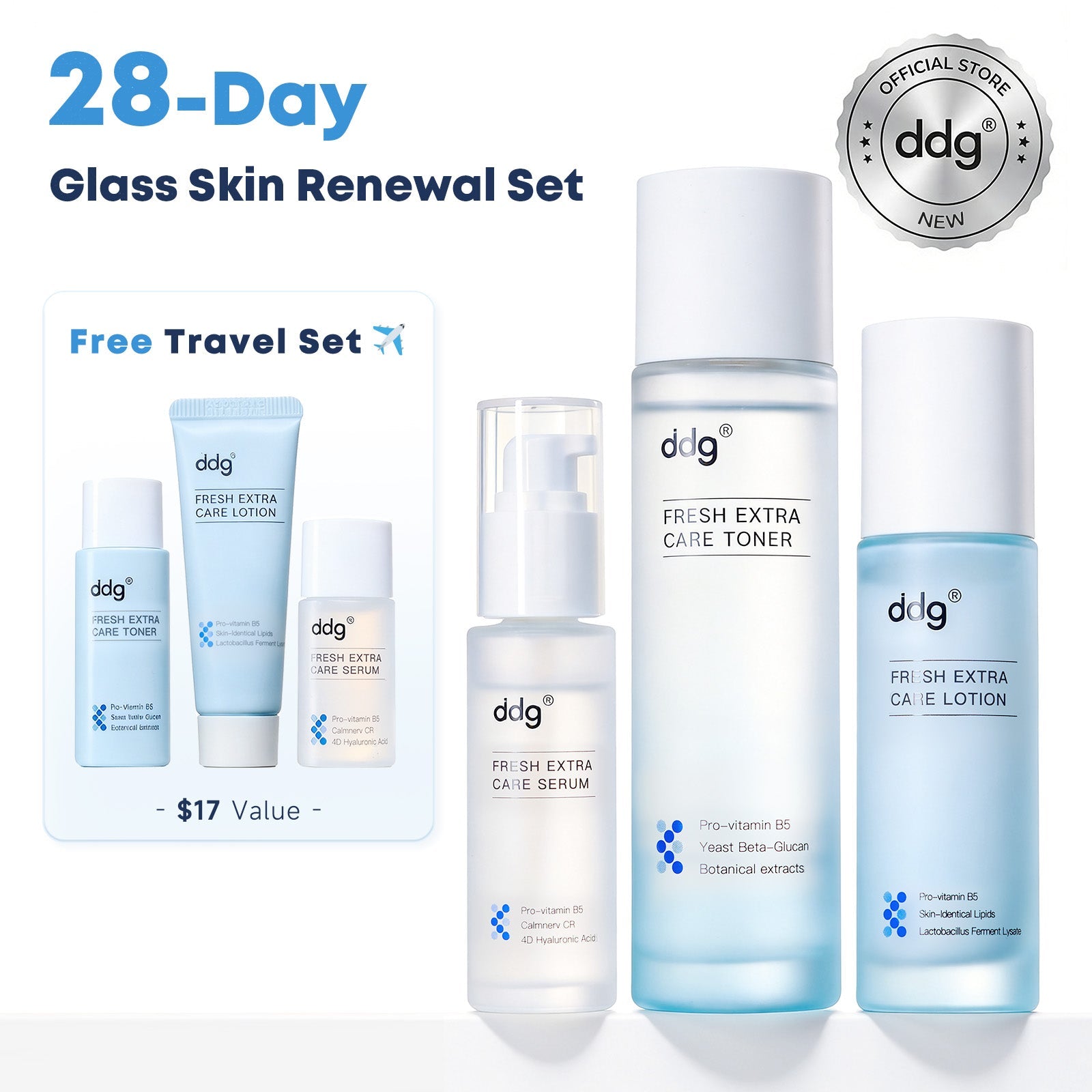
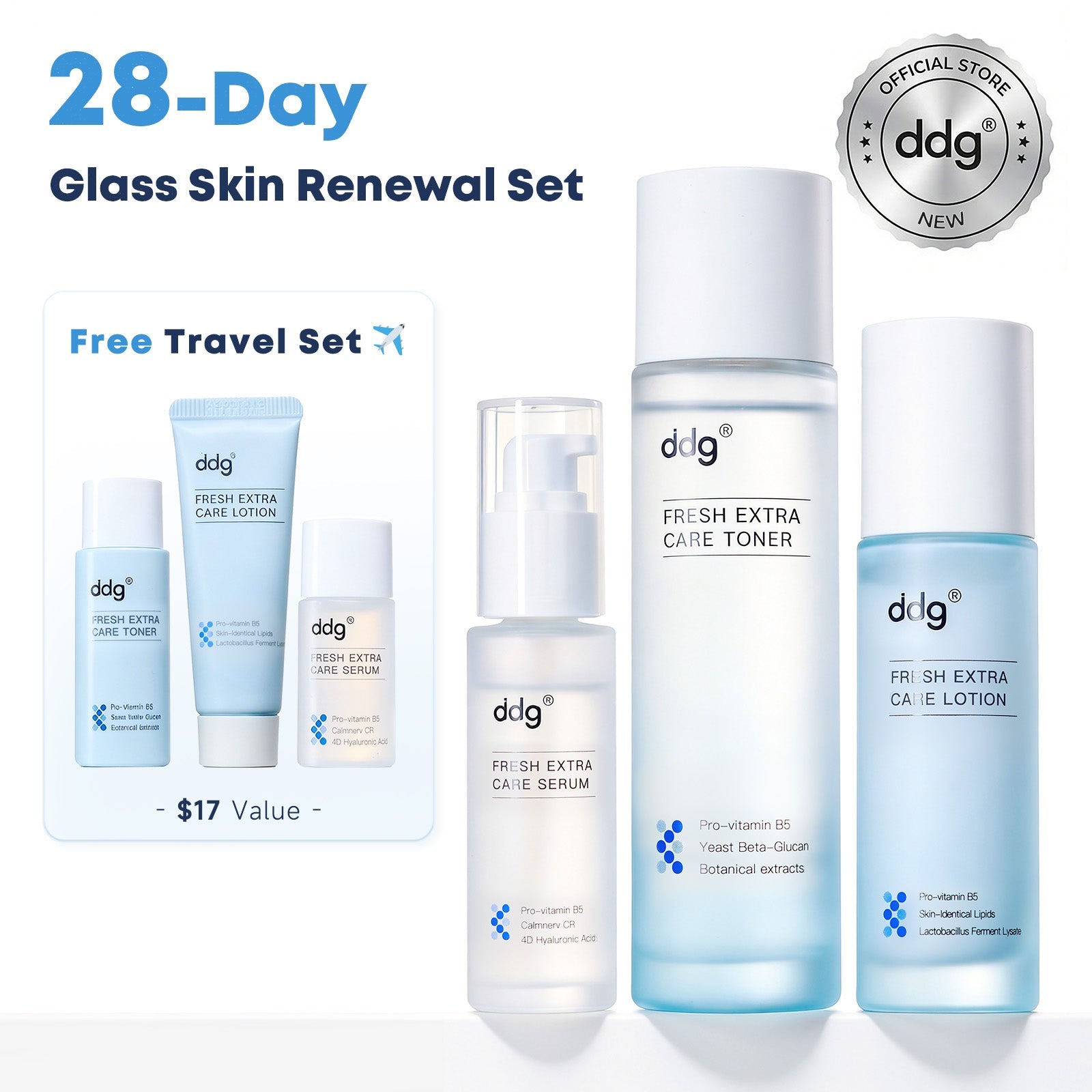
28-Day Glass Skin Renewal Set
The barrier-supporting foundation your skin needs when using multiple active ingredients
- Ceramide + Peptide + Hyaluronic Acid — repairs and strengthens barrier compromised by actives
- Toner + Serum + Lotion protocol — hydrates, locks in moisture, and calms sensitivity
- Lightweight, fast-absorbing texture — layers seamlessly under or over azelaic acid and vitamin C
5 Mistakes People Make When Combining These Ingredients
- Not Waiting Between Layers — Applying azelaic acid immediately after vitamin C without a 60-second wait is the most common mistake. The stinging you feel isn't a "chemical reaction" — it's your skin being hit with two actives at once before the first has absorbed. Set a timer if you need to.
- Starting Both at the Same Time — Introducing azelaic acid and vitamin C on the same day, into the same routine, is like asking your skin to acclimate to two new roommates who both have strong personalities. Introduce one for 2 weeks, confirm tolerability, then add the second. Gradual introduction is the difference between a glowing complexion and a red, stinging one.
- Using Oxidized Vitamin C — A vitamin C serum that's turned yellow, orange, or brown is oxidized and no longer effective. Worse, oxidized ascorbic acid can be pro-oxidant, meaning it may increase free radical damage instead of protecting against it. Store your vitamin C in the refrigerator and replace it if the color changes. An oxidized vitamin C layered under azelaic acid is doubly problematic — you're getting neither ingredient's benefit and risking irritation.
- Forgetting Sunscreen — Both ingredients increase your skin's sensitivity to UV radiation (azelaic acid mildly, vitamin C indirectly through its exfoliating effect on some formulations). Using them without SPF is like mopping the floor while the faucet is running — you're undoing progress in real time. Choose an SPF 30+ that's non-comedogenic and apply it as the final morning step, every single day.
- Ignoring Barrier Distress Signals — Tightness, shininess (not from oil), stinging when applying plain moisturizer, and increased redness are all signs your barrier is struggling. When this happens, the correct response is not to "push through" — it's to pause both actives for 3–5 days, use only a gentle cleanser and a barrier-repair moisturizer, and reintroduce at lower frequency. A damaged barrier creates hyperpigmentation. The whole point of using brightening ingredients is undermined if your barrier is inflamed.
Frequently Asked Questions
Can you use azelaic acid and vitamin C in the same routine?
Yes. Apply vitamin C first (it's thinner and pH-dependent), wait 60 seconds for absorption and pH normalization, then apply azelaic acid, followed by moisturizer and SPF. If your skin is sensitive or reactive, the AM/PM split — vitamin C in the morning, azelaic acid at night — is the gentler and equally effective approach.
Does vitamin C cancel out azelaic acid?
No — this is a persistent myth based on pH incompatibility concerns that don't hold up in practice. Azelaic acid's mechanism (tyrosinase inhibition + anti-inflammatory action) operates independently of vitamin C's pH-dependent activity. They work through different pathways and can complement each other. The real concern isn't chemical cancellation — it's cumulative irritation if your skin isn't acclimated to both.
Should I use azelaic acid in the morning or at night with vitamin C?
The optimal setup for most people is vitamin C in the morning and azelaic acid at night. Vitamin C provides daytime antioxidant protection and boosts sunscreen efficacy. Azelaic acid works overnight on melanocytes and inflammation during the skin's repair cycle. If you prefer to use both in the morning, apply vitamin C first, wait 60 seconds, then azelaic acid, and always finish with SPF 30+.
What are the side effects of using azelaic acid and vitamin C together?
The most common side effect is mild stinging, tingling, or temporary redness when first combining them. Azelaic acid already causes a transient itching sensation in many new users during the first 1–2 weeks, and adding vitamin C can intensify this sensation. To minimize it: start on alternate mornings, always wait 60 seconds between layers, and buffer with moisturizer. If burning persists, separate them into AM and PM routines.
Can I use azelaic acid with vitamin C if I have sensitive skin?
Yes, but separate them by routine — vitamin C in the morning, azelaic acid at night. Start each at 2–3 times per week (not daily), and always apply moisturizer first as a buffer. If even this causes irritation, use them on alternate days rather than the same 24-hour period. Sensitive skin benefits more from gentle, consistent long-term use than from aggressive daily layering.
Which goes first, azelaic acid or vitamin C?
Vitamin C goes first when layering in the same routine. It's almost always thinner and more water-based than azelaic acid formulations, and it requires a low pH for optimal penetration — applying it first to clean skin ensures it absorbs at its ideal pH. Wait 60 seconds after vitamin C, then apply azelaic acid. If using azelaic acid first (as some oily-skin users prefer), the order can be reversed — but the 60-second wait between layers remains essential.
The Bottom Line
Azelaic acid and vitamin C are not enemies. They're allies — two of the most effective brightening ingredients in dermatology, working through complementary mechanisms that, when paired correctly, tackle hyperpigmentation more thoroughly than either could alone. The drama you've read about pH conflicts and ingredient cancellations is largely theoretical; in practice, the only real barrier to using them together is whether your skin can tolerate the combined sensory impact — and that's something you can train your skin into with patience and smart layering.
At ddg Beauty, we believe that effective skincare doesn't have to be harsh. Our 28-Day Glass Skin Renewal Set was formulated with ceramides, peptides, and hyaluronic acid precisely for this reason — to give your skin the barrier support it needs to handle active ingredients like azelaic acid and vitamin C without the redness and stinging that often come with them. And our Cleansing Balm ensures that the first step of your routine — cleansing — doesn't become a source of irritation before your actives even touch your skin.
Start slow. Layer smart. Wear sunscreen. Your skin will thank you.
Browse our full collection to build a routine that supports — not sabotages — your brightening goals.
Related Articles
- How to Layer Skincare Ingredients Correctly: The Ultimate Guide — Master the order of application so every active, including azelaic acid and vitamin C, absorbs properly and works at full strength.
- Best Ingredients for Hyperpigmentation: 5 Derm-Approved Picks — See where azelaic acid and vitamin C rank among the top brightening ingredients, and how they compare to niacinamide, retinoids, and AHAs.
- Azelaic Acid vs Niacinamide: Which One Is Better for Your Skin? — If the azelaic acid + vitamin C combination is too intense, this gentler duo might be your perfect match.