How to Layer Skincare Ingredients Correctly: The Ultimate Guide
You've invested in a Vitamin C serum, a niacinamide treatment, a hyaluronic acid booster, and your favorite moisturizer. But standing in front of the bathroom mirror, one question stops you cold: which one goes first? You're not alone. According to a 2024 consumer survey by Mintel, 67% of skincare users admit they're unsure about the correct product application order—and that uncertainty is costing you results. Layering skincare ingredients correctly isn't just about being organized; it's the difference between products that work synergistically and products that cancel each other out entirely.
In this guide, we'll break down the science of ingredient layering, give you a clear AM/PM framework, and troubleshoot the most common mistakes—so every product in your routine earns its place on your shelf.
Table of Contents
- The Science: Why Ingredient Order Matters
- The Universal Layering Rule: Thinnest to Thickest
- Complete AM & PM Layering Sequence
- Ingredient Pairing Guide: What Goes Together (and What Doesn't)
- 5 Common Layering Mistakes That Sabotage Your Routine
- How to Layer by Skin Type
- Frequently Asked Questions
- Putting It All Together
The Science: Why Ingredient Order Matters
Your skin isn't a sponge—it's a selective barrier. The outermost layer, the stratum corneum, is composed of tightly packed corneocytes surrounded by lipid bilayers. This "brick-and-mortar" structure is designed to keep things out, which means skincare ingredients have to navigate a surprisingly sophisticated defense system to reach their target.
Three scientific principles govern whether an ingredient actually penetrates:
- Molecular weight: Molecules under 500 Daltons pass through the stratum corneum far more readily than larger ones. This is why lightweight serums with smaller molecules (like hyaluronic acid fragments and niacinamide at 122 Da) should be applied before heavier occlusives.
- Lipophilicity (oil/water partition): Water-soluble ingredients travel through the intracellular spaces, while oil-soluble ingredients pass directly through the lipid matrix. If you apply an oil before a water-based serum, you create a hydrophobic film that blocks water-soluble actives entirely.
- pH dependence: Many active ingredients—especially acids like glycolic, lactic, and azelaic acid—require a low pH (3.0–4.5) to remain in their free-acid form, which is the state that penetrates and works. Applying a higher-pH product immediately after can neutralize the acid before it has time to work.

The Universal Layering Rule: Thinnest to Thickest
If you remember only one skincare principle, make it this: apply products from the thinnest, most water-like consistency to the thickest, most occlusive consistency. This isn't an arbitrary beauty convention—it's dictated by physics. Thin, water-based formulas evaporate quickly and penetrate the upper epidermis within minutes. Thick creams and oils form a semi-occlusive film that seals everything underneath.
Here is the hierarchy, from first to last:
- Cleansers — Removed, so they always come first.
- Toners / Mists — Nearly 100% water; delivered as a fine spray or patted on.
- Treatment Essences / Boosters — Water-light with fermented ingredients or humectants.
- Water-Based Serums — Niacinamide, hyaluronic acid, peptides, azelaic acid suspensions.
- Emulsions / Light Lotions — Oil-in-water formulas that bridge serum and cream.
- Creams / Moisturizers — Heavier water-in-oil or anhydrous bases.
- Face Oils / Balms / Occlusives — The final seal; almost purely lipid-based.
- Sunscreen — Always last in the AM. It must form an uninterrupted film on the skin surface.
Within the same consistency tier (e.g., multiple serums), apply the one with the lowest pH first. For example, a Vitamin C serum (pH ~3.0–3.5) goes before a niacinamide serum (pH ~5.0–6.5).
Complete AM & PM Layering Sequence
Your morning and evening routines serve different purposes, and your layering strategy should reflect that. The table below gives you a clear, science-backed sequence for both.
| Step | AM Routine | Why | PM Routine | Why |
|---|---|---|---|---|
| 1 | Water-based cleanser or splash of water | Remove overnight sebum without stripping | Oil cleanser → Water-based cleanser (double cleanse) | Remove sunscreen, makeup, and daily pollutants |
| 2 | Hydrating toner / mist | Prime skin for better serum absorption | pH-adjusting or exfoliating toner (2–3×/week) | Prep skin; exfoliate on designated nights |
| 3 | Vitamin C (L-ascorbic acid) serum | Antioxidant protection against UV-generated free radicals; synergizes with SPF | Treatment active: retinol or AHA/BHA or azelaic acid | Cell turnover and repair during overnight recovery; never layer retinol + acids together |
| 4 | Hydrating serum (hyaluronic acid, peptides, glycerin-based) | Boost hydration under moisturizer and SPF | Niacinamide or peptide serum | Barrier repair, pore refinement, and collagen support |
| 5 | Lightweight moisturizer (gel or lotion) | Lock in hydration without heaviness | Richer cream moisturizer | Overnight repair and transepidermal water loss (TEWL) prevention |
| 6 | Broad-spectrum SPF 30+ | Non-negotiable UV protection; sits on top as a film | Face oil or sleeping mask (optional) | Final occlusive seal for maximum overnight hydration |

Ingredient Pairing Guide: What Goes Together (and What Doesn't)
Not all hero ingredients play nicely together. Some amplify each other; others create irritation, deactivate one another, or simply waste your money. Here's a practical pairing matrix for the most common combinations people ask about.
| Ingredient A | Ingredient B | Verdict | How to Layer |
|---|---|---|---|
| Vitamin C (L-AA) | Sunscreen | ✅ Synergy | Vitamin C first, wait 60s, then SPF. They work better together than apart. |
| Niacinamide | Vitamin C (L-AA) | ⚠️ Use with care | The old myth says they cancel out—research shows they can be used together, but sensitive skin may flush. Layer niacinamide 15 min after Vitamin C, or use one AM and one PM. |
| Retinol | AHA / BHA | ❌ Avoid same routine | Both exfoliate and accelerate cell turnover. Using them together dramatically increases irritation risk. Alternate nights, or use AHA in AM and retinol in PM. |
| Azelaic Acid | Moisturizer | ✅ Safe & recommended | Azelaic acid first on clean skin; wait 1–2 min, then moisturizer. Azelaic acid is gentle enough for daily use with almost any moisturizer. |
| Benzoyl Peroxide | Vitamin C | ❌ Avoid | Benzoyl peroxide oxidizes Vitamin C, rendering it ineffective. Use BP in cleanser form (AM) and Vitamin C separately (PM), or alternate days. |
| Hyaluronic Acid | Any active | ✅ Universal buffer | HA is inert and hydrating—apply after actives to soothe and hydrate before moisturizer. It works with everything. |
| Peptides | Direct Acids | ⚠️ Separate | Low pH can hydrolyze peptides, breaking them down before they absorb. Use peptides in AM and acids in PM, or wait 20–30 min between layers. |
For a deeper dive into azelaic acid specifically—one of the most versatile and gentle actives—see our full guide: How to Use Azelaic Acid for Acne: A Complete Beginner's Guide.
5 Common Layering Mistakes That Sabotage Your Routine
Mistake #1: Applying Face Oil Before Water-Based Serum
This is the single most common error we see. Oils are occlusive by nature—they create a hydrophobic film that water-based serums cannot penetrate. If your niacinamide or hyaluronic acid serum is sitting on top of a layer of rosehip oil, it's not absorbing. Fix: Oils always go last, or mixed into your moisturizer as the final step.
Mistake #2: Using Too Many Actives in One Routine
More is not better. Layering a Vitamin C serum, followed by niacinamide, followed by azelaic acid, followed by retinol isn't a power routine—it's a recipe for a compromised barrier. Fix: Choose one primary treatment active per routine. Your skin can only process so much at once, and irritation is counterproductive to every skincare goal.
Mistake #3: Not Waiting Between Layers
Piling products on immediately, one after another, essentially mixes them into a single slurry on your skin. This dilutes actives, changes their pH, and can cause pilling. Fix: Wait until each layer feels "tacky-dry" (about 30–60 seconds for water-based products, 2–3 minutes for acids and retinoids).
Mistake #4: Skipping Sunscreen After Morning Actives
AHAs, BHAs, and retinoids increase photosensitivity. If you're layering these in the AM without SPF, you're actively increasing sun damage. Fix: All exfoliating actives and retinoids belong in the PM. Vitamin C is the exception—it enhances sunscreen protection when layered underneath.
Mistake #5: Layering Incompatible Textures
Silicone-heavy primers or moisturizers can create a film that causes water-based products to pill and roll off. Fix: Check your product bases. If your serum is water-based (first ingredient: water/aqua) and your moisturizer is silicone-based (first ingredients include dimethicone or cyclopentasiloxane), give the serum extra time to fully absorb, or switch to a water-based moisturizer for better compatibility.
How to Layer by Skin Type
The universal "thinnest to thickest" rule applies to everyone, but the number of layers, product textures, and specific ingredient choices should vary by skin type. Here's how to adapt:
Sensitive Skin
Philosophy: Less is more. Sensitive skin has a thinner stratum corneum and higher transepidermal water loss (TEWL), which means ingredients penetrate faster—but so do irritants. Stick to 3–4 steps max: gentle cleanse → one targeted treatment (like azelaic acid, which is well-tolerated by sensitive and redness-prone skin) → moisturizer → SPF (AM). Always patch-test new actives and introduce them one at a time with 7–10 days between additions. Browse our azelaic acid formula, designed specifically for sensitive, reactive skin.
Oily / Acne-Prone Skin
Philosophy: Lightweight layers that don't clog. Prioritize gel and gel-cream textures over heavy creams. Layer: cleanse → BHA toner (2–3×/week) → niacinamide serum (daily, regulates sebum) → oil-free gel moisturizer → SPF. Avoid layering multiple occlusives; your skin produces enough oil already.
Dry / Dehydrated Skin
Philosophy: Layer hydration, then seal it in. The "7 Skin Method" isn't a myth—multiple thin layers of hydration work. Try: cleanse → hydrating toner (patted in 2–3 times) → hyaluronic acid serum on damp skin → ceramide-rich moisturizer → face oil (PM only). Each layer builds on the previous one, and the final occlusive step prevents overnight moisture loss.
Combination Skin
Philosophy: Zone-based layering. Apply lighter products all over, then use richer products only on dry areas (cheeks, jaw). For example: apply niacinamide serum everywhere, then press moisturizer into the cheeks and avoid the T-zone. Spot-treat active breakouts with a targeted treatment on those areas only—don't apply drying ingredients to already-dry zones.
Frequently Asked Questions
Can I layer niacinamide and Vitamin C together?
Yes, but with caveats. The old concern was that they form a niacinamide-ascorbate complex that causes flushing—but this requires high concentrations, low pH, and heat over time. In practice, most people can use them 15 minutes apart or alternate AM/PM. If you have sensitive skin, use niacinamide in the AM and Vitamin C in the PM to be safe. For more on building a sensitive-skin routine, read Best Skincare Routine for Sensitive Skin: AM & PM Full Routine.
How long should I wait between skincare layers?
For water-based products (toners, serums): 30–60 seconds or until "tacky-dry." For pH-dependent actives (Vitamin C, AHAs, BHAs): 2–5 minutes to allow the low-pH environment to work before neutralization by the next product. For retinol: 5–10 minutes before moisturizer to minimize irritation. For moisturizer and SPF: no wait needed—just apply and go.
Can I use azelaic acid with moisturizer?
Absolutely—and it's actually recommended. Azelaic acid is water-soluble and gentle, making it one of the easiest actives to layer. Apply it to clean, dry skin, wait 1–2 minutes, then apply your moisturizer. If you're new to azelaic acid, you can also use the "sandwich method": moisturizer → azelaic acid → moisturizer, which buffers any initial tingling without significantly reducing efficacy.
What happens if I layer incorrectly?
At minimum, products won't absorb properly and you're wasting money. At worst, you can irritate your skin barrier, trigger breakouts, or cause chemical reactions that deactivate your actives. The most common real-world consequence is pilling—when products ball up on the skin surface—which means nothing is penetrating.
Should my AM and PM routine have different layering?
Yes, and for good reason. AM focuses on protection (antioxidants + SPF). PM focuses on repair and treatment (retinoids, exfoliants, peptides). Sun-sensitive actives like retinol and AHAs should always be PM-only. The layering order stays the same (thin to thick), but the ingredients change.
Do I really need a toner in my layering routine?
Not strictly, but a well-formulated hydrating toner can make a measurable difference. It adds a water layer that helps subsequent humectants (like hyaluronic acid) bind more moisture. Think of it as priming a canvas—the paint goes on smoother. Skip astringent, alcohol-heavy toners entirely; they disrupt the barrier and make layering harder, not easier.
Can I layer multiple serums?
Yes, up to 2–3 water-based serums is reasonable. Apply them in order of: (1) lowest pH, (2) thinnest consistency. For example: Vitamin C serum → hyaluronic acid serum → niacinamide serum. Beyond three serums, you're likely overlapping benefits and increasing pilling risk. Consolidate if possible; many modern serums already combine multiple ingredients.
What if my product has multiple active ingredients?
Let the product's primary function guide you. If it's labeled as an "exfoliating toner with niacinamide," treat it as an exfoliant first (early in the routine, after cleansing). If it's a "moisturizer with peptides," treat it as a moisturizer (later in the routine, before oils). The formulation's base and primary purpose determines its placement, not individual ingredients in the INCI list.

Putting It All Together
Layering skincare correctly isn't about memorizing a complex flowchart—it's about understanding a few core principles and trusting them:
- Thinnest to thickest. Always. It's your north star.
- One treatment active per routine. Your skin needs focus, not a cocktail.
- Wait between layers. Patience turns good products into great results.
- SPF ends every AM routine. No exceptions.
- Your skin type dictates how many layers you need, not how many products exist in your cabinet.
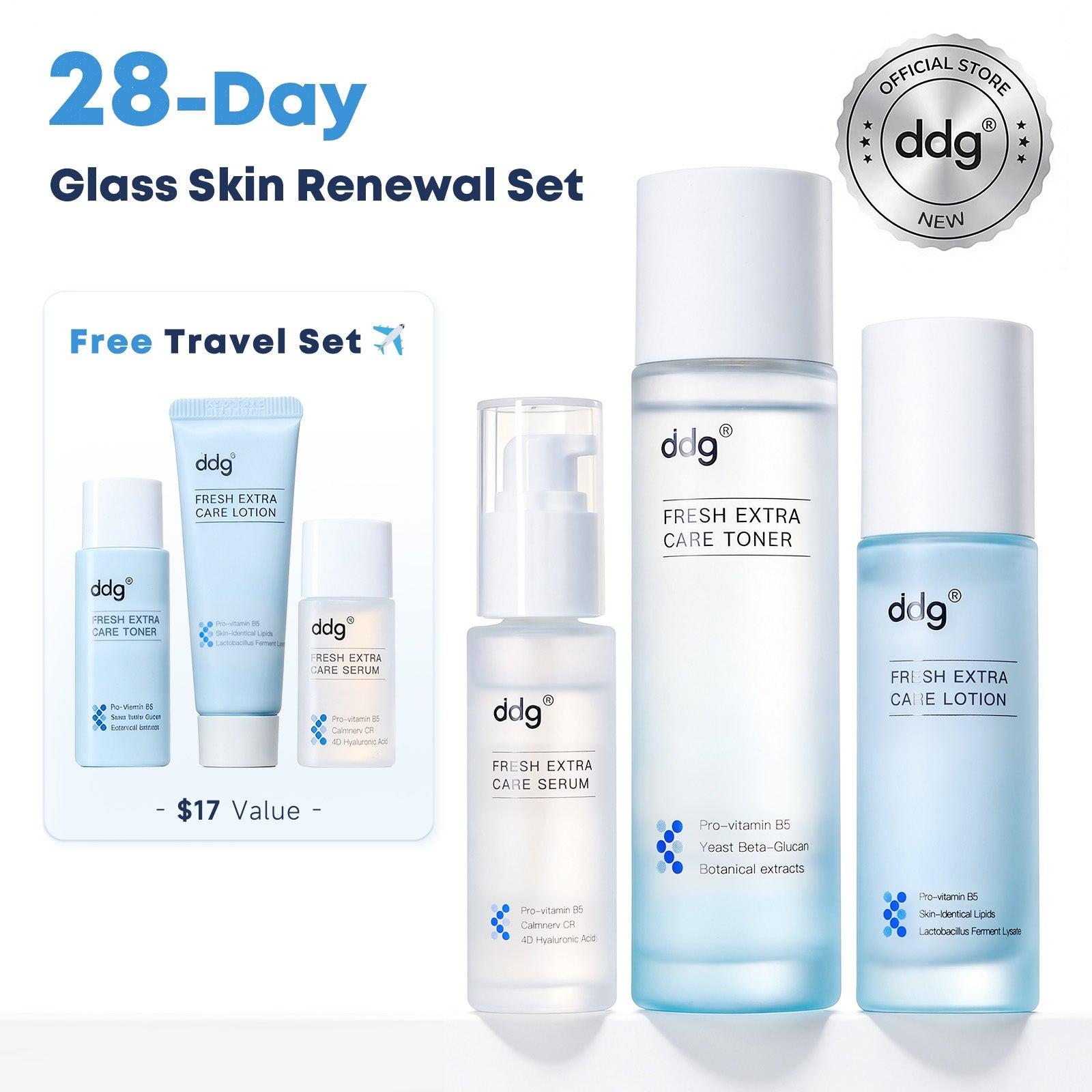
At ddg, we believe skincare should be science-backed, gentle, and effective—not complicated for the sake of it. Every product we formulate is designed to layer seamlessly with the rest of your routine, using concentrations that deliver results without overwhelming sensitive skin. No unnecessary fragrance, no irritants, no guesswork.
If you're building or simplifying your routine, start with the essentials: a gentle cleanser, a targeted treatment for your primary concern, and a moisturizer that supports your barrier. From there, add one product at a time and let your skin tell you what it needs. Explore our barrier-supporting moisturizers to find the right texture for your skin type.