Nighttime Skincare Routine for Dry Skin: The Ultimate PM Guide
If you have dry skin, you already know the morning struggle — that tight, papery feeling that moisturizer can only temporarily fix. But here's the truth most people miss: your nighttime routine is where the real repair happens. While you sleep, your skin's barrier goes into recovery mode, and the right PM routine can mean the difference between waking up parched and waking up plump. This guide walks you through the science, the steps, and the ingredients that actually work for dry skin at night.
Key Insight: Dry skin isn't just about lacking water — it's about a compromised barrier that can't hold moisture in. A nighttime routine for dry skin needs three categories of ingredients working in sequence: humectants to draw water in, emollients to fill in the cracks, and occlusives to seal it all in. Miss one category, and your routine underperforms.
Table of Contents
- Why Nighttime Is Dry Skin's Repair Window
- The 6-Step Nighttime Routine for Dry Skin
- The Dry Skin Ingredient Matrix: Humectants, Emollients & Occlusives
- Not All Dry Skin Is the Same: 4 Subtype Adjustments
- Seasonal Adjustments: Winter vs Summer PM Routines
- 6 Nighttime Mistakes That Make Dry Skin Worse
- Frequently Asked Questions
Why Nighttime Is Dry Skin's Repair Window
Your skin doesn't just "turn off" when you go to sleep — it shifts into an entirely different biological mode. Understanding this shift is the key to building a nighttime routine that actually works.
The Science: Circadian Rhythm & Your Skin Barrier
Your skin follows a 24-hour circadian clock, just like your sleep-wake cycle. During the day, its priority is defense: producing antioxidants, thickening the outer layer, and secreting sebum to protect against UV, pollution, and bacteria. At night — specifically between 11 PM and 4 AM — the priority shifts to repair. Cell proliferation peaks, DNA damage is corrected, and the barrier undergoes active reconstruction.
But here's the catch for dry skin: transepidermal water loss (TEWL) — the amount of water that evaporates through your skin — increases by up to 25% at night. This means that while your skin is trying to repair itself, it's simultaneously losing more water than during the day. If you go to bed without the right products, your skin wakes up in worse shape than when you went to sleep.
What This Means for Your Routine
Your nighttime routine needs to do two things simultaneously: support the repair process (with barrier-building ingredients like ceramides and peptides) and prevent water loss (with occlusives that create a physical seal). A daytime moisturizer alone isn't enough — daytime products are designed for defense, not overnight repair.

The 6-Step Nighttime Routine for Dry Skin
This isn't a generic "cleanse, tone, moisturize" list. Each step has a specific job in the dry-skin repair cascade, and the order matters — skip or reorder any step, and you compromise the entire sequence.
1 Oil-Based First Cleanse
Why: Dry skin's worst enemy isn't dirt — it's the cleanser that strips your natural oils. An oil-based cleanser dissolves makeup, sunscreen, and sebum without disrupting your barrier's lipid layer. Water-soluble makeup removers and micellar waters often contain surfactants that can be drying; an oil or balm cleanser works by "like dissolves like" — the oil in the cleanser binds to the oil-based impurities on your skin and rinses them away cleanly, leaving your barrier lipids intact.
How: Scoop a coin-sized amount of cleansing balm, warm it between your palms for 10 seconds until it melts into an oil, then massage gently onto dry skin for 60 seconds. Focus on areas where makeup and SPF accumulate — T-zone, jawline, around the nose. Add a splash of water to emulsify (the oil turns milky), then rinse thoroughly with lukewarm water. Never use hot water on dry skin — it strips lipids and spikes TEWL.
Oat Kernel OilSqualaneJojoba Oil
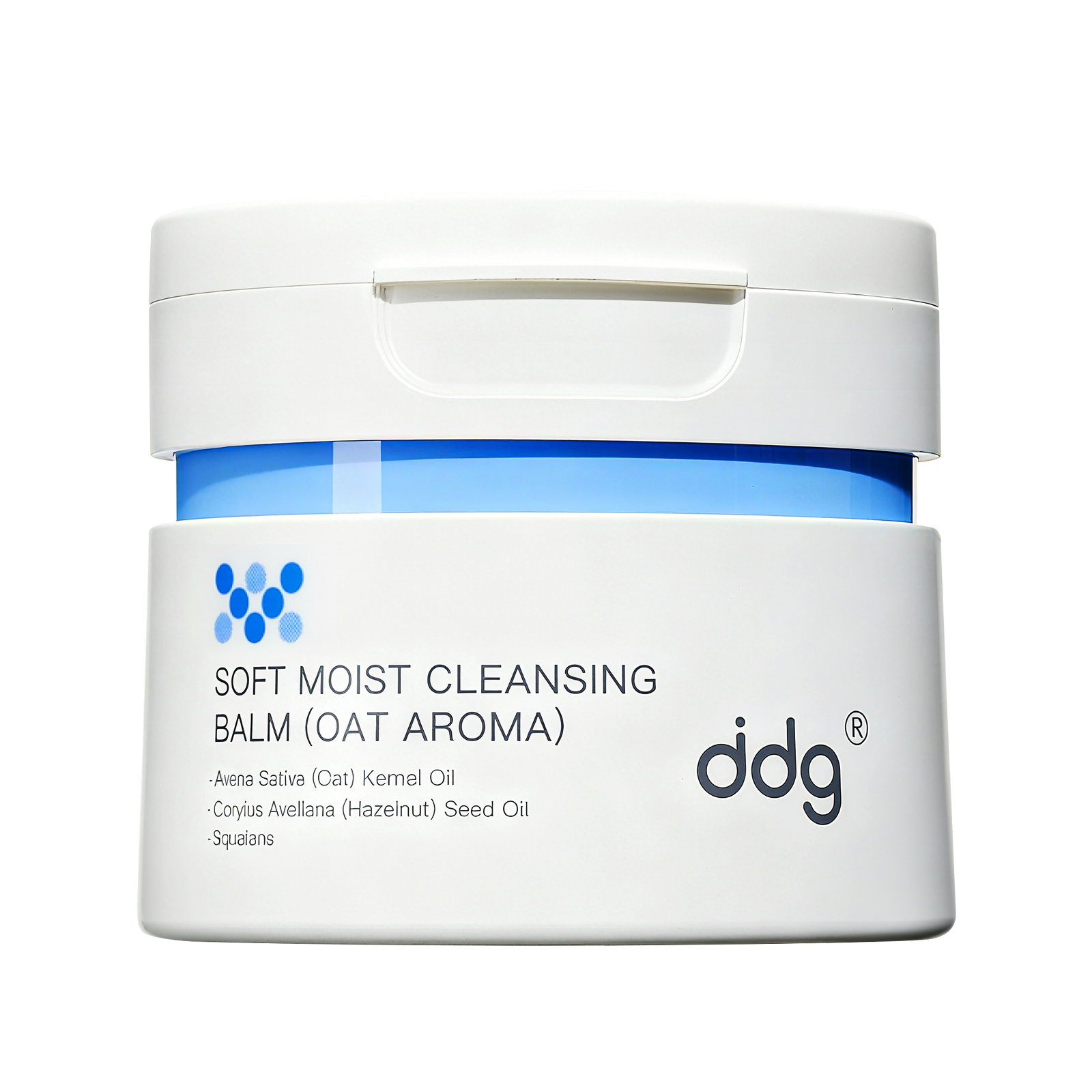
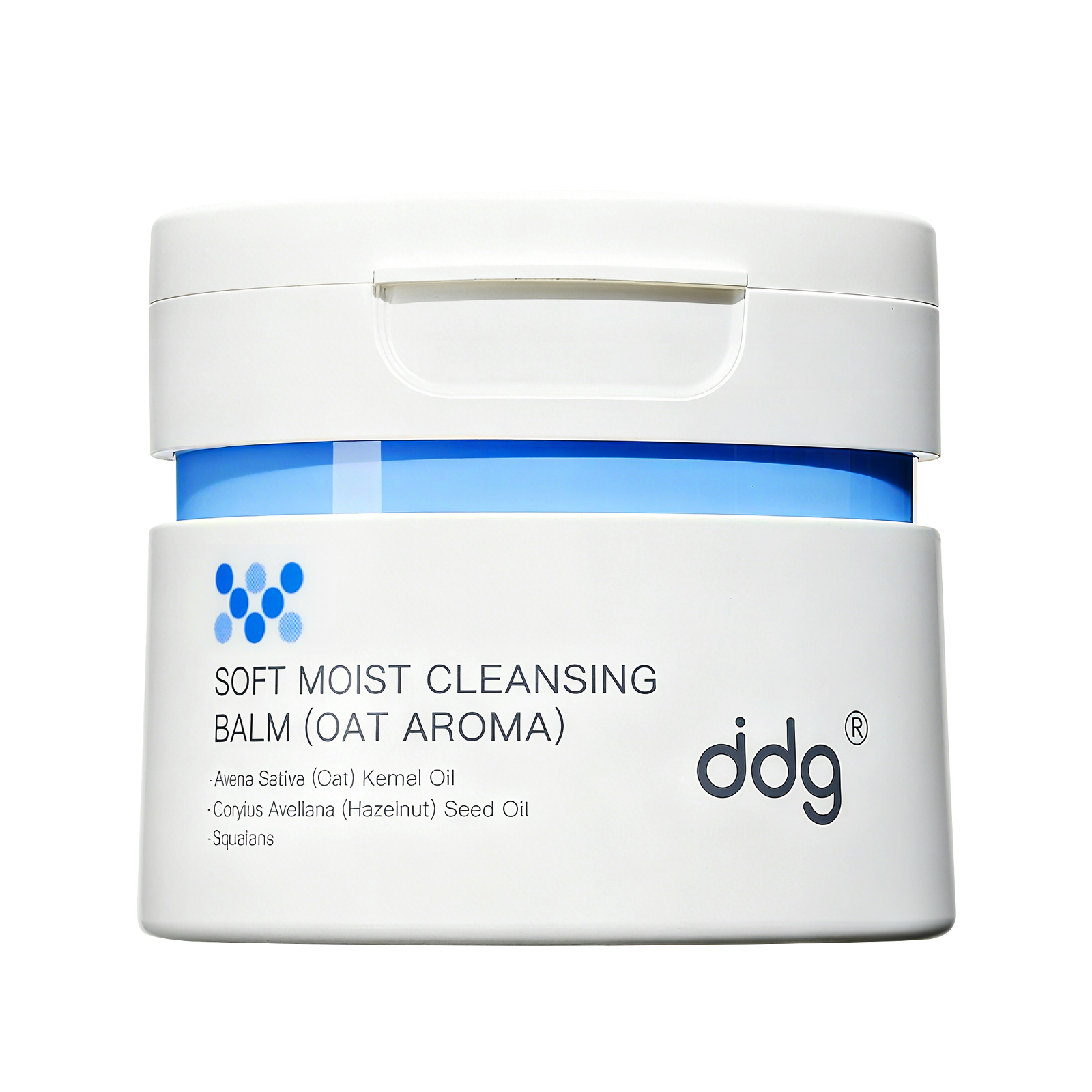
ddg Makeup Remover Cleansing Balm
A barrier-first first-cleanse that melts SPF and makeup without stripping dry skin
- Oat Kernel Oil + Squalane — dissolves impurities while reinforcing your lipid barrier
- 15-second balm-to-oil-to-milk transformation — no tugging, no residue, no dry aftermath
- Magnetic spatula keeps the formula hygienic between uses
2 Cream-Based Second Cleanse
Why: The second cleanse removes any remaining residue from the oil cleanser — but for dry skin, this should feel like applying lotion, not soap. Foaming cleansers and gel cleansers contain surfactants (sodium lauryl sulfate, cocamidopropyl betaine) that create lather by binding to both oil and water — and in doing so, they strip your skin's natural lipids along with the dirt. A cream or milk cleanser cleanses via gentle emulsifiers that respect your barrier. If your skin feels "squeaky clean" after washing, your cleanser is too harsh.
How: Apply a pea-sized amount of cream cleanser to damp skin. Massage in circular motions for 30 seconds — no need to create lather. Rinse with lukewarm water and pat dry with a soft towel (don't rub — friction damages a dry skin barrier). Your skin should feel soft and comfortable, not tight.
CeramidesGlycerinOat Extract
3 Hydrating Toner on Damp Skin
Why: This is the step most dry-skin routines skip — and it's the one that makes the biggest difference. A hydrating toner (not an astringent one — no alcohol, no witch hazel) applied to damp skin acts as a humectant delivery vehicle. Humectants like hyaluronic acid and glycerin work by pulling water into the skin — but they need water to pull from. Applying toner to towel-dried but still slightly damp skin gives humectants the water they need to do their job. Skip this step, and your serum and moisturizer are fighting an uphill battle.
How: After patting your face dry but while it's still slightly damp (not dripping), pour toner into your palms and press — don't wipe — into your skin. Pressing is gentler and more effective for absorption than patting with a cotton pad, which creates micro-friction. Wait 30 seconds before the next step.
Hyaluronic AcidPanthenolBeta-Glucan
4 Barrier-Repair Serum
Why: Serums are the workhorse of any nighttime routine — they deliver concentrated active ingredients deeper than moisturizers can. For dry skin at night, the goal is barrier repair, not exfoliation. Your serum should focus on ceramides (which make up 50% of your skin's barrier lipids), peptides (which signal your skin to produce more collagen and repair damage), and niacinamide (which boosts ceramide production from within). Avoid serums with high concentrations of AHAs, BHAs, or retinoids on most nights — save those for 1–2 designated "treatment nights" per week.
How: Dispense 2–3 drops and press gently into skin, focusing on the driest areas first (usually cheeks and around the mouth). Don't rub aggressively — pressing maximizes absorption without friction.
Ceramides NP/AP/EOPPeptidesNiacinamide
5 Rich Moisturizer
Why: While the serum delivers concentrated actives, the moisturizer delivers emollients — ingredients that fill the spaces between skin cells, smooth texture, and create a flexible protective film. For dry skin at night, choose a moisturizer that's richer than your daytime one. Look for shea butter, squalane, ceramides, and fatty acids. The texture should feel substantial — not heavy or greasy, but noticeably more emollient than a daytime lotion. This is the layer that makes your skin feel instantly comfortable after the tightness of the day.
How: Take a generous amount (more than your daytime moisturizer — dry skin needs it) and warm it between your fingertips before applying. Use upward, sweeping motions to encourage circulation. Pay extra attention to the driest zones.
Shea ButterSqualaneCeramidesFatty Acids
6 Occlusive Seal
Why: This is the step that separates an average nighttime routine from an exceptional one. All the humectants and emollients in the world won't help if the water they deliver evaporates by 2 AM. An occlusive — squalane oil, a petrolatum-based balm, or a sleep mask — creates a physical barrier that prevents transepidermal water loss while you sleep. Think of it as the lid on a pot of soup: without it, all the moisture escapes as steam.
How: Take 2–3 drops of squalane oil and press it over your moisturizer, or apply a thin layer of a petrolatum-based balm to the driest areas (cheeks, around the nose, lips). Don't rub — you want it to sit on top, not absorb. If using a sleep mask, apply a visible layer and let it stay on overnight.
SqualanePetrolatumRosehip Oil

The Morning Test: Here's how to know if your nighttime routine is working: when you wake up, your skin should feel soft and comfortable — not tight, not greasy, and not like you need to immediately apply moisturizer. If you wake up tight, your occlusive layer wasn't sufficient. If you wake up feeling like products are still sitting on your face, your moisturizer was too heavy or you used too much occlusive. Adjust one variable at a time.

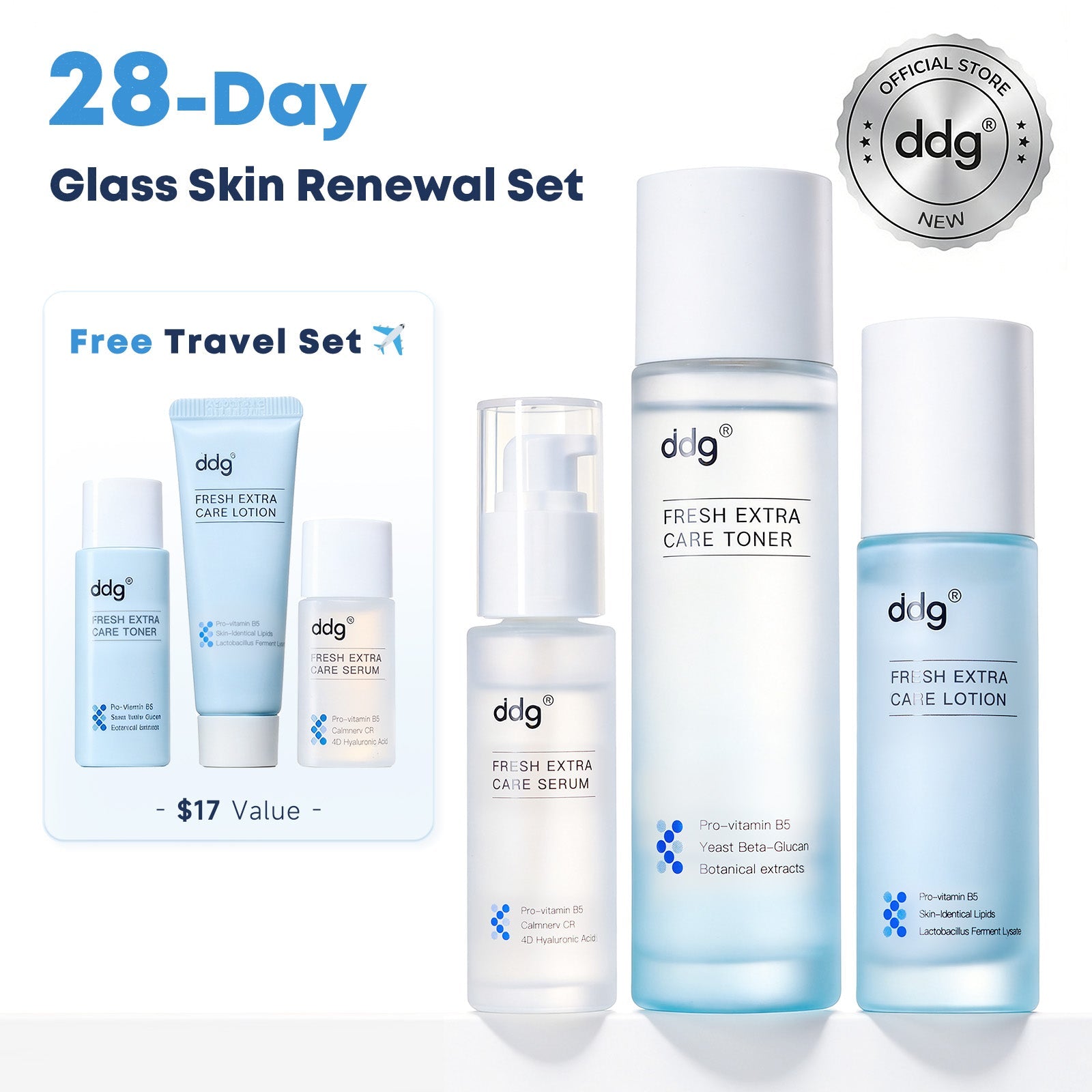
28-Day Glass Skin Renewal Set
A complete toner + serum + lotion protocol that handles steps 3–5 for dry skin in one streamlined system
- Ceramide + Peptide + Hyaluronic Acid — the exact ingredient trio dry skin's barrier needs at night
- Toner → Serum → Lotion protocol — pre-formulated to layer correctly without guesswork
- Lightweight textures that absorb fast — rich enough for night, light enough not to feel heavy
The Dry Skin Ingredient Matrix: Humectants, Emollients & Occlusives
The single most important concept in dry-skin skincare is the difference between three ingredient categories. Understanding this is the difference between randomly buying "for dry skin" products and building a routine that actually fixes the problem.
| Category | What It Does | Best Ingredients | Where in Your Routine | Sign You're Missing It |
|---|---|---|---|---|
| Humectants | Draw water into the skin from the environment and deeper skin layers. Work best on damp skin. | Hyaluronic Acid, Glycerin, Panthenol (B5), Beta-Glucan, Urea | Steps 3–4 (Toner & Serum) | Skin feels tight within 30 minutes of moisturizing; products absorb too fast |
| Emollients | Fill in gaps between skin cells, smooth texture, and restore flexibility. The "filler" layer of your barrier. | Ceramides, Squalane, Shea Butter, Oat Kernel Oil, Fatty Acids, Cholesterol | Steps 4–5 (Serum & Moisturizer) | Skin looks dull, feels rough or flaky, fine lines appear more pronounced |
| Occlusives | Form a physical seal on the skin's surface that prevents water evaporation. The "lid" on your routine. | Petrolatum, Lanolin, Dimethicone, Beeswax, Squalane (at high concentrations) | Step 6 (Final Layer) | Skin is hydrated at bedtime but tight and dry by morning; moisturizer "disappears" overnight |
Not All Dry Skin Is the Same: 4 Subtype Adjustments
"Dry skin" is an umbrella term. Your routine should shift depending on which subtype you're dealing with.

| Subtype | What It Feels Like | PM Routine Adjustment | Ingredient Focus |
|---|---|---|---|
| Dehydrated-Dry | Tight, fine lines more visible, dullness. Skin drinks up products instantly but feels dry again quickly. | Double down on humectants. Use toner on damp skin, add a second layer of hydrating serum before moisturizer. Occlusive step is non-negotiable. | Hyaluronic Acid, Glycerin, Panthenol |
| Lipid-Dry | Rough, flaky, looks ashy. Skin flakes are visible. Barrier feels "thin" and reactive. | Avoid all actives (retinol, AHAs) until barrier is rebuilt — 3–4 weeks minimum. Use a ceramide-heavy serum + rich shea butter moisturizer + petrolatum occlusive. | Ceramides, Cholesterol, Fatty Acids (3:1:1 ratio ideal) |
| Mature-Dry | Persistent dryness + loss of elasticity. Skin feels thinner, crepey texture on cheeks. | Add peptides to serum step. Use a richer moisturizer with both emollients and anti-aging peptides. Add rosehip oil as occlusive (rich in vitamin A precursor). | Peptides, Rosehip Oil, Ceramides, Niacinamide |
| Sensitive-Dry | Dryness + redness, stinging, visible capillaries. Products often burn on application. | Simplify to 4 steps: cream cleanser → toner on damp skin → ceramide moisturizer → squalane. No fragrance, no essential oils, no actives. Patch test everything. | Ceramides, Oat Extract, Panthenol, Squalane |
If you're not sure which subtype you have, start with the lipid-dry protocol — it's the gentlest and most universally effective for any compromised barrier. After 2 weeks, adjust based on how your skin responds.
Seasonal Adjustments: Winter vs Summer PM Routines
Dry skin doesn't experience the same routine year-round. The biggest variable is humidity — and it changes everything about how your products perform.
❄️ Winter PM Routine (Low Humidity / Indoor Heating)
- First Cleanse: Same oil cleanser, but massage for 90 seconds instead of 60 — indoor heating makes SPF and dead skin cells cling more stubbornly.
- Second Cleanse: Switch to a richer cream cleanser with shea butter or oat — don't use the same lightweight cream cleanser you'd use in summer.
- Toner: Apply 2 layers instead of 1. Press in the first layer, wait 15 seconds, press in the second. Skin is thirstier in winter.
- Serum: Add 2 drops of squalane oil to your serum before applying. This boosts emollience without needing a separate product.
- Moisturizer: Use a richer formulation — look for shea butter or petrolatum in the top 5 ingredients.
- Occlusive: Upgrade from squalane oil to a petrolatum-based balm or sleep mask. This is the one step that makes the biggest difference in winter.
- Bonus: Run a humidifier in your bedroom overnight. It's the single most underrated tool for dry skin.
☀️ Summer PM Routine (Moderate-High Humidity)
- First Cleanse: Essential — you're wearing more SPF. Don't skip just because it's humid.
- Second Cleanse: Switch back to a lighter cream cleanser. Over-cleansing in humidity leads to congested pores even on dry skin.
- Toner + Serum: Keep both. Dry skin still loses water in summer, just more slowly.
- Moisturizer: Switch to a gel-cream texture with ceramides. Lighter, but don't drop the ceramides — your barrier still needs them.
- Occlusive: Skip on humid nights (dew point above 60°F). On dry summer nights or in air-conditioned rooms, use 1–2 drops of squalane.

6 Nighttime Mistakes That Make Dry Skin Worse
- Washing With Hot Water — Hot water melts your skin's natural lipid barrier on contact. The tighter your skin feels after washing, the hotter the water was. Use lukewarm water — it should feel barely warm on your wrist. This alone can reduce TEWL by up to 40% compared to hot water washing.
- Skipping the First Cleanse Because "I Don't Wear Makeup" — Sunscreen, pollution particles, and the day's accumulated sebum are oil-soluble. A cream cleanser alone won't fully remove them. Even on no-makeup days, an oil-based first cleanse ensures your second cleanser and treatment products can actually reach your skin instead of sitting on top of a layer of SPF and debris.
- Applying Products to Bone-Dry Skin — Humectants like hyaluronic acid need water to work. If you wait until your face is completely dry after cleansing, you've missed the absorption window. Every step from toner through serum should be applied while the previous layer is still slightly damp. The moisture from each layer helps carry the next one in.
- Over-Exfoliating to "Remove Flakes" — Dry, flaky skin isn't dirt that needs scrubbing off — it's your damaged barrier literally shedding. Exfoliating it makes the problem worse by removing the healthy cells beneath the flakes. Stop all exfoliation for 2 weeks, focus exclusively on barrier repair (ceramides + occlusives), and the flakes will resolve on their own as your barrier heals. Then reintroduce gentle chemical exfoliation (PHA, not AHA/BHA) once per week.
- Using the Same Products Day and Night — Daytime moisturizers are formulated to be lightweight, fast-absorbing, and compatible with makeup and SPF. They're not designed for the 8-hour repair window. Your nighttime moisturizer should be richer, with higher concentrations of barrier-repair ingredients. Having two different moisturizers isn't a luxury for dry skin — it's a necessity.
- Neglecting Your Neck and Chest — The skin on your neck and chest is thinner and has fewer oil glands than your face, making it even more prone to dryness. Whatever you apply to your face at night, extend it down to your neck and décolletage. This is especially important for the occlusive step — the neck loses water overnight faster than any other area.
Frequently Asked Questions
What is the best nighttime skincare routine for dry skin?
A complete nighttime routine for dry skin has 6 steps: (1) oil-based cleanser to remove makeup and SPF without stripping, (2) hydrating creamy cleanser, (3) hyaluronic acid toner on damp skin, (4) ceramide-rich serum to repair barrier lipids, (5) peptide moisturizer, and (6) a thin occlusive layer (squalane or petrolatum) to seal everything in overnight. The most impactful steps for dry skin are the double-cleanse and the occlusive final layer.
Should I wash my face at night if I have dry skin?
Yes — skipping nighttime cleansing traps sunscreen, pollutants, and dead skin cells on your barrier overnight, preventing your products from penetrating. The key is using the right cleanser: an oil-based balm or cream cleanser that dissolves impurities without stripping natural oils. Avoid foaming cleansers with sulfates — if your skin feels squeaky-clean or tight after washing, switch to a gentler formula.
How do I layer my nighttime skincare for dry skin?
Layer from thinnest to thickest: oil cleanser → cream cleanser → hydrating toner (on damp skin) → serum → moisturizer → occlusive. Each step should be applied while the previous layer is still slightly damp for maximum absorption. Wait 30–60 seconds between steps. The oil cleanser breaks down makeup and SPF first, and the occlusive final layer seals everything so it works overnight instead of evaporating.
What ingredients should I look for in a nighttime routine for dry skin?
Dry skin needs three categories: humectants (hyaluronic acid, glycerin, panthenol) that draw water in; emollients (ceramides, squalane, shea butter, oat kernel oil) that fill gaps between cells; and occlusives (petrolatum, lanolin, dimethicone) that seal moisture in. A complete PM routine should include at least one from each category. For nighttime specifically, peptides support collagen synthesis during the repair cycle, and niacinamide strengthens barrier function over time.
Can I use active ingredients like retinol in my nighttime routine for dry skin?
Yes, with precautions. Use the sandwich method: moisturizer first as a buffer, then your active, then another moisturizer layer. Limit actives to 2–3 nights per week, and never combine multiple actives on the same night. Stop immediately if your skin feels tight, stings, or flakes — those are signs of barrier compromise. On active-free nights, focus purely on ceramides and peptides for barrier repair.
Why does my dry skin still feel tight in the morning?
The most likely cause is a missing occlusive final step. Humectants draw water in and emollients smooth the surface, but without an occlusive seal, all that hydration evaporates overnight through transepidermal water loss. Add squalane oil or a petrolatum-based balm as your last step. Other common causes: foaming cleansers stripping your barrier, low bedroom humidity (use a humidifier), or over-exfoliation during the day.
How does a nighttime routine for dry skin change in winter vs summer?
Winter requires heavier occlusion: switch to a richer cream cleanser, add facial oil before moisturizer, use a thicker petrolatum-based occlusive, and run a humidifier overnight. Summer keeps the same steps but with lighter textures: gel-cream moisturizer instead of rich cream, optional occlusive on humid nights, but still the same double-cleanse and toner-serum core. The ingredient categories (humectants, emollients, occlusives) stay the same — only the weight changes.
The Bottom Line
A nighttime routine for dry skin isn't about buying more products — it's about understanding the order, the ingredient categories, and the why behind each step. The three-category framework (humectants → emollients → occlusives) is your compass. Every product in your PM routine should clearly fit into one of those roles. If you're layering three moisturizers that are all emollients, you're missing humectants and occlusives — and your skin will still wake up dry.
At ddg Beauty, we built our 28-Day Glass Skin Renewal Set to solve exactly this problem — a toner (humectant), serum (ceramide + peptide emollient delivery), and lotion (occlusive-finishing moisturizer) pre-formulated to work as a complete system, so you don't have to guess about layering. And our Cleansing Balm ensures that the very first step of your nighttime routine — cleansing — never becomes a source of barrier damage. Because dry skin deserves to wake up comfortable, not compensating.
Start with the 6 steps. Listen to your skin. Adjust one variable at a time. And never, ever wash your face with hot water.
Explore our full range of barrier-supporting skincare — from cleansing balms to ceramide-rich serums — designed to help dry skin thrive, not just survive.
Related Articles
- The Best Skincare Routine for Sensitive Skin — Many dry skin types are also sensitive. This guide covers the gentlest product choices and routine adjustments for reactive, redness-prone skin that often accompanies dryness.
- How to Layer Skincare Ingredients Correctly: The Ultimate Guide — Master the thinnest-to-thickest rule and learn exactly which ingredients can (and can't) be layered to avoid irritation and maximize efficacy.
- How to Build a Minimalist Skincare Routine: 3 Steps to Better Skin — If a 6-step PM routine feels overwhelming, start here. This guide distills skincare down to the essentials that still work for dry skin.