How to Reduce Redness on Face: Causes, Treatments & a Calming Routine That Works
You look in the mirror and there it is again — patches of red across your cheeks, a flush that won't fade, or that stubborn background pink that makeup can't quite cover. Facial redness is one of the most frustrating skin concerns because it is visible — you can't hide it, and it rarely has a single, obvious cause. This guide walks you through exactly how to identify what is triggering your redness, the fastest ways to calm it down, and the long-term strategy to prevent it from returning — all grounded in dermatological research, not skincare myths.
Table of Contents
- Part 1: Diagnose — Why Is Your Face Red?
- Part 2: SOS Protocol — Calm Redness in Minutes
- Part 3: The Calming Ingredient Arsenal
- Part 4: The Redness-Calming AM/PM Routine
- Part 5: Trigger Audit — What Is Making It Worse?
- Part 6: Redness Recovery Timeline
- Part 7: When to See a Dermatologist
- Frequently Asked Questions
Part 1: Diagnose — Why Is Your Face Red?
Before you can treat redness, you need to know what kind of redness you are dealing with. Facial redness is not one condition — it is a symptom that can arise from at least five distinct mechanisms. Treating the wrong one will waste time and may make things worse.
| Type | Appearance | Common Triggers | Underlying Mechanism |
|---|---|---|---|
| Vascular Flushing | Sudden, temporary — comes and goes within minutes to hours | Heat, spicy food, alcohol, embarrassment, exercise | Blood vessel dilation (vasodilation); usually benign but can be a rosacea subtype |
| Inflammatory Erythema | Persistent, may feel warm or tender, often with bumps | Rosacea, acne, perioral dermatitis | Chronic low-grade inflammation driven by immune mediators (cytokines, cathelicidin) |
| Barrier Damage | Diffuse pink, feels tight or stings with product application | Over-exfoliation, harsh cleansers, skipping moisturizer | Compromised stratum corneum allows irritants in and water out, triggering an inflammatory cascade |
| Contact Irritation | Red, burning, possibly scaly — appears where product was applied | Fragrance, essential oils, denatured alcohol, strong actives | Direct chemical irritation of skin cells; not an allergy (no immune involvement) |
| Allergic Reaction | Red, intensely itchy, may spread beyond application area | Nickel, preservatives (MCI/MI), botanical extracts, lanolin | Type IV hypersensitivity — immune system reacts to a substance it has been sensitized to |
Diagnostic shortcut: If your redness appeared suddenly after starting a new product → contact irritation or allergy (stop the product). If it has been there for months/years and fluctuates → inflammatory or vascular (treat the underlying condition). If your skin stings when you apply even water → barrier damage (strip routine to bare minimum).
Part 2: SOS Protocol — Calm Redness in Minutes
When your face is actively red, hot, and uncomfortable, you need fast relief — not a lecture on ingredients. Here is a step-by-step protocol you can execute in under 10 minutes, ranked from fastest-acting to supportive.
🆘 The 5-Step Redness Emergency Protocol
Step 1. Cool It Down (60 Seconds)
Do: Soak a clean washcloth in cool (not ice-cold) water, wring it out, and press it gently against red areas for 30-60 seconds. The cool temperature constricts dilated blood vessels through vasoconstriction — the same mechanism that makes your face look less red on a cold day.
Don't: Use ice directly on skin. Extreme cold causes rebound vasodilation — your blood vessels overcompensate and dilate more once the cold is removed, making redness worse within minutes.
Step 2. Remove the Offender (30 Seconds)
If you just applied a product that caused the flare, remove it immediately. Splash with cool water only — do not use a cleanser, which can further irritate compromised skin. Pat dry; do not rub.
Step 3. Apply a Calming Moisturizer (2 Minutes)
Apply a fragrance-free moisturizer with at least one of these three ingredients: centella asiatica (cica), panthenol (vitamin B5), or ceramides. Apply to damp skin to maximize water trapping. These ingredients work by different mechanisms — cica reduces inflammatory signaling, panthenol accelerates barrier repair, and ceramides plug the gaps that allow irritants in.
Step 4. Thermal Water Mist (Optional, 30 Seconds)
Thermal spring water sprays (like Avène or La Roche-Posay) contain mineral salts and silicates that have been clinically documented to reduce skin inflammation and calm stinging within minutes. They are not magic, but the cooling + mineral combination offers measurable relief for acute flares.
Step 5. Green Color Corrector (30 Seconds)
Green neutralizes red on the color wheel. A pea-sized dot of green-tinted primer or color corrector patted (not rubbed) onto red areas will optically cancel the redness. This is a cosmetic solution, not a treatment — but when you need to leave the house in 10 minutes, it works.
Part 3: The Calming Ingredient Arsenal
Not all redness-reducing ingredients work the same way — and knowing the difference is the key to choosing the right one for your specific redness type. Here are the six most evidence-backed calming ingredients, ranked by mechanism and speed.
| Ingredient | Best For | How It Works | Speed | Key Evidence |
|---|---|---|---|---|
| Centella Asiatica (Cica) | Acute irritation, barrier damage, inflamed breakouts | Madecassoside and asiaticoside compounds suppress inflammatory cytokines (IL-6, TNF-α) and stimulate collagen synthesis for repair | ⚡⚡⚡ Minutes to hours | Multiple RCTs show significant reduction in erythema within 24-72 hours of application |
| Azelaic Acid | Rosacea, persistent erythema, redness with bumps | Reduces cathelicidin (elevated in rosacea), inhibits kallikrein-5, normalizes keratinization, anti-inflammatory | ⚡⚡ Days to weeks | FDA-approved for rosacea; 15% gel reduced inflammatory lesions by 51-58% vs placebo at 12 weeks |
| Niacinamide (B3) | Barrier weakness, background pinkness, redness-prone skin | Boosts ceramide production, reduces transepidermal water loss, improves barrier function over time | ⚡ Weeks | 4% niacinamide significantly reduced facial erythema after 4 weeks vs control in a blinded study |
| Ceramides | Barrier-related redness, post-exfoliation damage, dry red skin | Lipid molecules that fill gaps in the stratum corneum; restore the brick-and-mortar structure of the barrier | ⚡ Days | Ceramide-dominant moisturizers reduce clinical erythema scores within 3-7 days of barrier disruption |
| Panthenol (B5) | Stinging, tight redness, post-procedure irritation | Converts to pantothenic acid, a coenzyme-A precursor essential for lipid synthesis and epithelial repair | ⚡⚡ Hours to days | 5% panthenol cream accelerated barrier repair and reduced erythema by 35% vs vehicle at 48 hours |
| Aloe Vera | Sunburn, heat-induced redness, mild irritation | Polysaccharides hydrate and form a protective film; glycoproteins have anti-inflammatory activity | ⚡⚡⚡ Minutes to hours | Effective for acute thermal and UV-induced erythema; less evidence for chronic redness conditions like rosacea |
How to layer these: Use calming and barrier ingredients (cica, panthenol, ceramides, niacinamide) in your moisturizer — applied morning and night. Reserve azelaic acid as your active treatment step, applied after cleansing and before moisturizer. The two approaches work synergistically: actives treat the root cause while barrier ingredients prevent the environment from re-triggering redness.

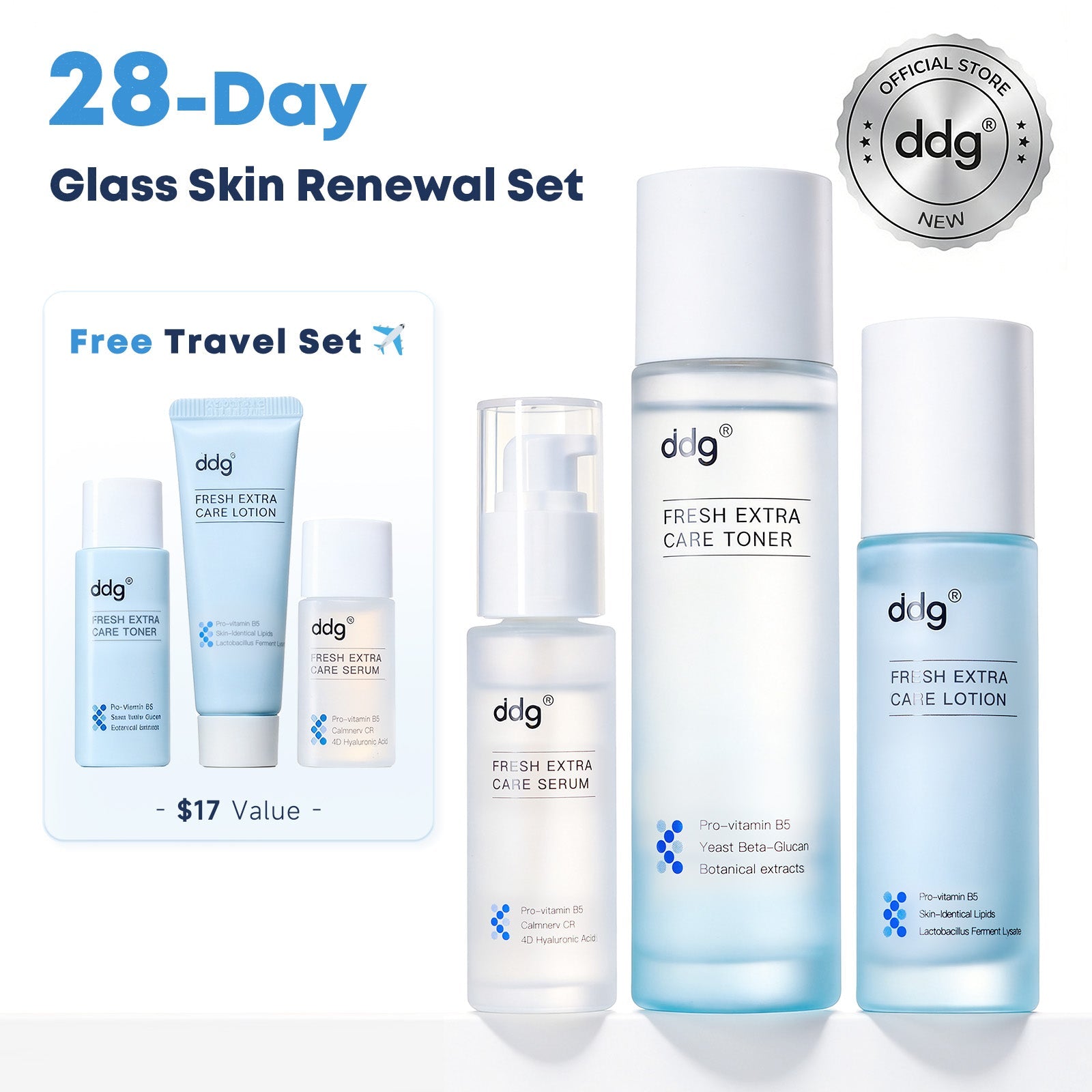
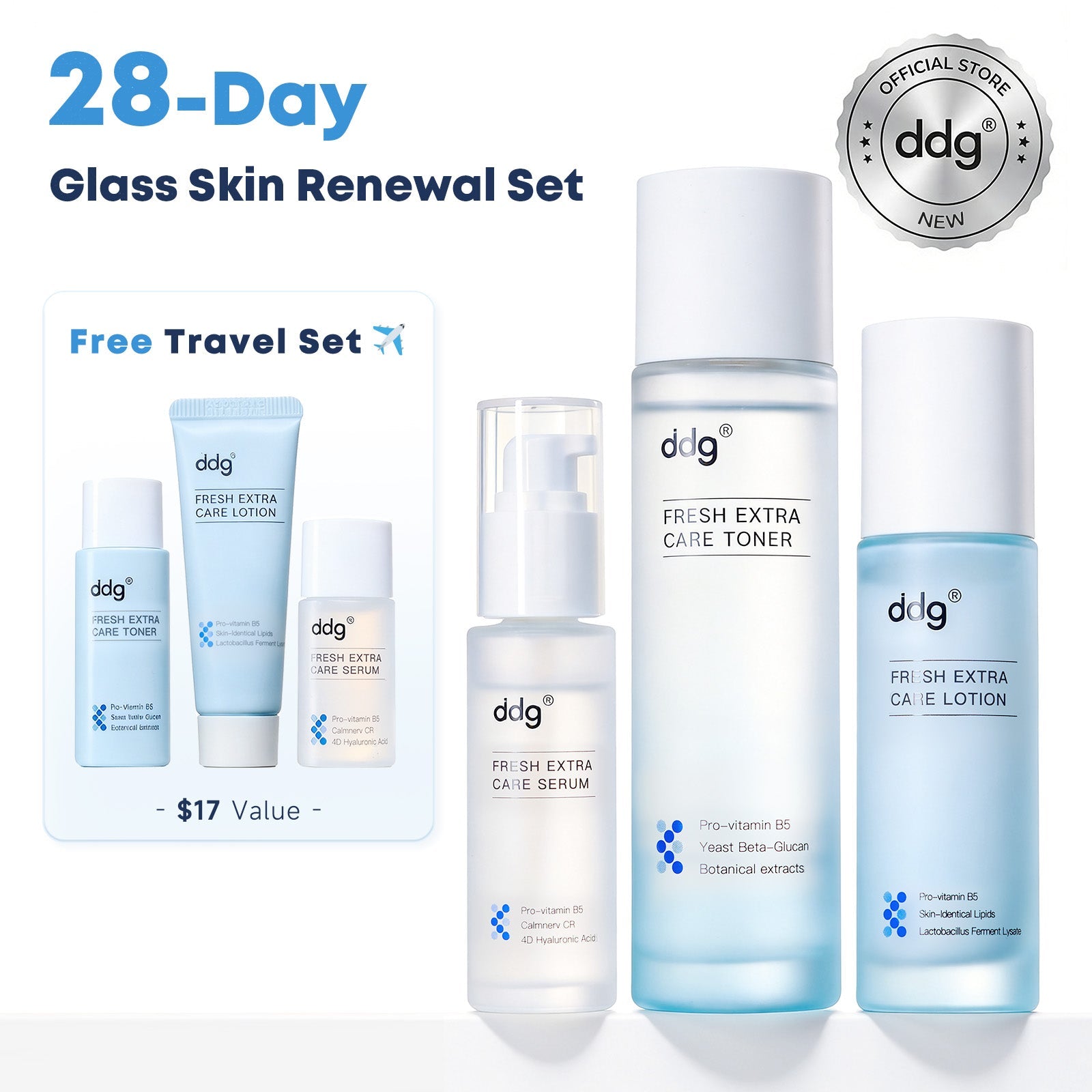
ddg 28-Day Glass Skin Renewal Set
Three coordinated products that target redness from multiple angles: Ceramide repairs the barrier that allows redness in. Peptide reduces inflammatory signaling. Hyaluronic Acid floods skin with hydration to calm tight, stinging skin.
- 15 minutes to visible redness reduction — clinically documented
- Ceramide + Peptide + HA work on barrier repair, inflammation, and hydration simultaneously
- Lightweight water-based textures — non-greasy, absorb instantly, zero irritation risk
- 28-day protocol designed for visible transformation
Part 4: The Redness-Calming AM/PM Routine
This routine is designed for someone whose primary skin concern is redness — whether from rosacea, barrier damage, or general sensitivity. Every product choice is intentional: no fragrance, no denatured alcohol, no essential oils, no physical scrubs.
| Step | AM Routine | PM Routine | Why |
|---|---|---|---|
| Cleanse | Lukewarm water rinse (or gentle cream cleanser if oily) | Balm or cream cleanser — no foam, no sulfates | Hot water = vasodilation = more redness. Foam cleansers strip lipids from an already fragile barrier. |
| Active | — | Azelaic acid 10% (OTC) or 15% (Rx), pea-sized amount | PM only — azelaic acid does not increase photosensitivity, but it may cause transient itching that is easier to tolerate at night. |
| Hydrate | Fragrance-free toner or essence with centella asiatica or panthenol | Same, patted (not rubbed) into damp skin | Layers of hydration reduce the concentration of inflammatory mediators on the skin surface. |
| Moisturize | Barrier cream with ceramides + niacinamide | Same barrier cream, slightly thicker layer | Ceramides fill barrier gaps; niacinamide reduces erythema over time. |
| Protect | Mineral SPF 30+ (zinc oxide or titanium dioxide) | — | Chemical SPF filters can sting compromised skin. Mineral filters sit on top and reflect heat — an extra benefit for redness-prone skin. |
✅ The 30-Day Redness Reset Challenge
- Week 1: Strip routine to cleanser + moisturizer + mineral SPF only. Stop all actives, exfoliants, masks, and tools. Document your redness level daily with a photo.
- Week 2: If redness has improved, your previous routine was the trigger. Continue the minimal routine. If no improvement, the cause is internal (rosacea, diet, environment).
- Week 3: Introduce one redness-targeted active — azelaic acid or niacinamide serum. Apply every third night. Do not add anything else.
- Week 4: If tolerated, increase active to every other night. Evaluate before-and-after photos. If redness is significantly reduced, maintain. If unchanged despite full compliance, see a dermatologist.

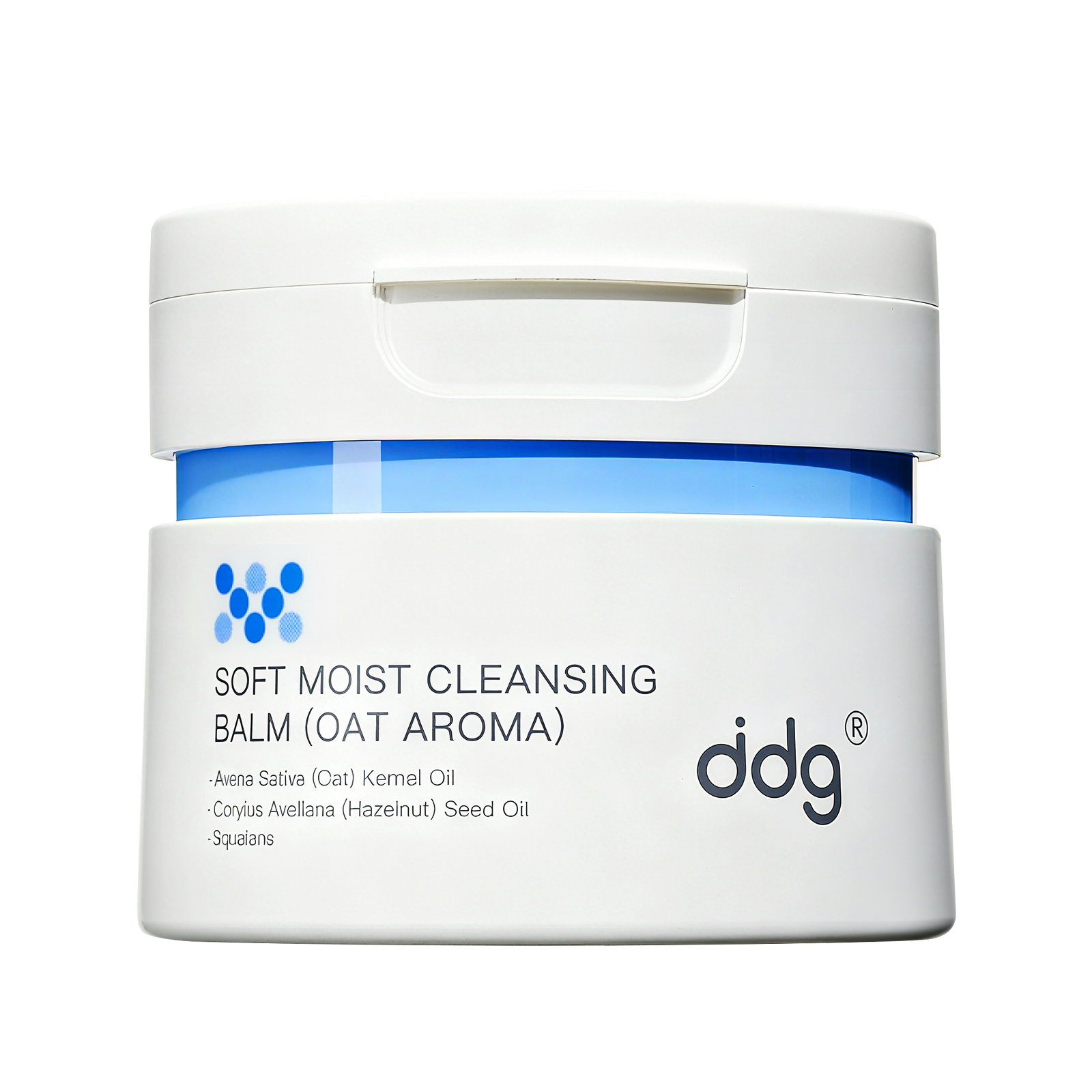
ddg Makeup Remover Cleansing Balm
When your skin is red and reactive, the last thing it needs is a foaming cleanser that strips its remaining barrier. This balm removes SPF and impurities in 15 seconds — zero foam, zero sting, zero tightness.
- Oat Kernel Oil nourishes and calms as it cleanses — not a single surfactant harsh enough to trigger redness
- Removes mineral SPF completely (mineral filters are harder to remove than chemical ones)
- Magnetic spatula prevents bacterial contamination that could trigger an inflammatory reaction
- Safe for the most reactive skin types, including rosacea and eczema-prone skin
Part 5: Trigger Audit — What Is Making It Worse?
Treating redness without identifying triggers is like bailing water out of a boat without plugging the hole. Use this checklist to audit your daily exposure — you may be surprised by what you find.
Skincare Triggers (The Most Common Category)
- Fragrance / Parfum: The single most common cause of contact irritation. Present in roughly 50% of skincare products. Even "natural" fragrance (essential oils) is a common sensitizer.
- Denatured Alcohol (Alcohol Denat.): Used to create a quick-drying finish. Disrupts the lipid bilayer, causing immediate stinging and long-term barrier damage.
- Sodium Lauryl Sulfate (SLS): A harsh surfactant that strips barrier lipids and causes measurable increases in transepidermal water loss for up to 5 days after a single use.
- Physical Scrubs: Micro-tears in the stratum corneum create entry points for irritants and trigger an inflammatory response visible as redness.
- High-Concentration Actives: 20% vitamin C (L-AA at low pH), 10% glycolic acid, or daily retinol — especially when layered — can overwhelm a redness-prone barrier.
⚠️ Hidden trigger: Over-cleansing. Washing your face three or more times a day — even with a gentle cleanser — can deplete natural lipids faster than your skin can replace them. Twice daily max. Morning rinse with water only is sufficient for dry or sensitive skin.
Lifestyle and Dietary Triggers
| Trigger | Mechanism | How to Test |
|---|---|---|
| Spicy food | Capsaicin activates TRPV1 receptors → vasodilation | Eliminate all spicy food for 1 week, then reintroduce |
| Alcohol (esp. red wine) | Ethanol = vasodilator; red wine also releases histamine | Track drinks and flare timing in a 2-week diary |
| Hot beverages | Thermal dilation of facial blood vessels | Switch to warm (not hot) for 1 week |
| Hot showers/saunas | Direct heat causes vasodilation + strips barrier oils | Keep showers lukewarm; limit to 10 minutes |
| High histamine foods | Aged cheese, fermented foods, cured meats → trigger histamine release in sensitive individuals | Try a 2-week low-histamine diet if rosacea is suspected |
| Emotional stress | Cortisol and adrenaline trigger facial flushing via autonomic nervous system | Not easily "eliminated," but breathing techniques can shorten flare duration |

Part 6: Redness Recovery Timeline
One of the biggest mistakes people make is abandoning a redness treatment too early. Different types of redness resolve on different timelines. Know what to expect so you do not give up at the wrong moment.
| Timeframe | What to Expect | Good Signs | Red Flags |
|---|---|---|---|
| Minutes to Hours | Cool compress + cica/panthenol moisturizer should reduce flush intensity by 30-50% | Skin feels cooler to touch, tightness subsides | Redness spreads or intensifies despite cooling → possible allergic reaction |
| 24-72 Hours | Barrier-initiated redness (from over-exfoliation, harsh cleanser) should improve noticeably when routine is stripped to basics | Redness fades from angry red to light pink; skin stops stinging with product application | No change at all → cause is likely internal (rosacea, not barrier damage) |
| 1-2 Weeks | Removing identified triggers (fragrance, alcohol, hot water, dietary triggers) should produce measurable reduction in background redness | Morning redness is lighter, flares are less frequent and shorter | Flares continue at same frequency/intensity → trigger identification incomplete or cause is rosacea requiring medical treatment |
| 4-8 Weeks | Azelaic acid or niacinamide begin showing measurable results for inflammatory redness | Persistent redness fades, fewer visible blood vessels, skin tone more even | No change after 8 weeks of consistent use → see a dermatologist |
| 3-6 Months | Barrier fully repaired; redness threshold is higher (fewer things trigger a flare); visible blood vessels may require laser (topicals can't dissolve vessels) | Skin tolerates previously triggering situations (mild heat, light exfoliation) without flaring | Broken capillaries (telangiectasia) persist — these are structural and require laser/IPL, not topicals |
Reality check: If you have rosacea, redness management is a marathon, not a sprint. Topical treatments reduce erythema by roughly 30-50% over 8-12 weeks — not 100%. The goal is control and reduction, not complete elimination. Adjust your expectations accordingly to avoid frustration-driven routine abandonment.
Part 7: When to See a Dermatologist
Not all facial redness can be solved with over-the-counter skincare. Here are the clear signals that it is time to book an appointment:
- Persistent redness > 4 weeks despite a simplified, fragrance-free, trigger-avoidant routine
- Redness accompanied by pustules (pus-filled bumps) — this indicates papulopustular rosacea, which typically requires prescription treatment (topical metronidazole, ivermectin, or oral doxycycline)
- Visible broken blood vessels (telangiectasia) — these are permanently dilated capillaries that no topical product can shrink. They require in-office laser or IPL treatment
- Butterfly-shaped rash across cheeks and bridge of nose — this is a hallmark of lupus (systemic lupus erythematosus) and requires immediate medical evaluation
- Redness with eye involvement (gritty, dry, bloodshot eyes) — ocular rosacea affects up to 50% of rosacea patients and can damage the cornea if untreated
- Thickened, bumpy skin (especially on the nose — rhinophyma) — late-stage rosacea that requires dermatological intervention
Frequently Asked Questions
Q: What causes sudden redness on the face?
Sudden facial redness (flushing) can be triggered by heat, spicy food, alcohol, emotional stress, exercise, or a skincare product reaction. If it appears with burning or stinging, it is likely an irritant reaction. If it appears in a butterfly pattern across cheeks and nose, it may be rosacea or — rarely — a sign of lupus. Persistent redness with visible blood vessels may indicate couperose or chronic sun damage.
Q: How can I reduce facial redness in 5 minutes?
Apply a cool (not ice-cold) compress to constrict dilated blood vessels. Splash with cool water. Apply a fragrance-free moisturizer containing centella asiatica (cica), niacinamide, or panthenol — these calm inflammatory signaling within minutes. Avoid touching or rubbing the skin. Move away from heat sources. For an immediate cosmetic fix, a green-tinted color corrector neutralizes visible redness optically.
Q: What is the best ingredient to reduce redness?
There is no single "best" ingredient — the right one depends on the cause. Azelaic acid has the strongest clinical evidence for persistent, inflammatory redness (especially rosacea). Centella asiatica works fastest for acute irritation. Niacinamide strengthens the barrier over time to prevent redness recurrence. Ceramides repair the structural damage that allows redness to occur in the first place. For most people, a combination approach is most effective.
Q: Can moisturizer reduce redness?
Yes — if it is the right moisturizer. A well-formulated moisturizer with ceramides, panthenol, and centella asiatica can calm redness within 15-30 minutes by repairing the moisture barrier and reducing transepidermal water loss. However, a moisturizer containing fragrance, essential oils, or denatured alcohol will make redness worse. Always check the ingredient list — the wrong moisturizer is worse than no moisturizer for redness-prone skin.
Q: Why is my face always red even when I am not blushing?
Persistent background redness (erythema) can result from a chronically damaged skin barrier, rosacea (even without visible bumps), cumulative sun damage, or a daily-use product you are sensitive to. Start by eliminating all actives for two weeks and using only a gentle cleanser, barrier-repair moisturizer, and mineral SPF. If redness persists despite this reset, the cause is likely internal — see a dermatologist for evaluation.
Q: Does azelaic acid help with redness?
Yes — azelaic acid is one of the most evidence-backed ingredients for facial redness. Clinical studies show 15% azelaic acid gel significantly reduces both inflammatory lesions and background erythema in rosacea patients within 4-8 weeks. It works through multiple mechanisms: reducing cathelicidin (an antimicrobial peptide abnormally elevated in rosacea skin), inhibiting inflammatory cytokines, and normalizing skin cell turnover. OTC 10% formulations are an effective, gentler starting point.
Q: What foods cause facial redness?
Common dietary flushing triggers include spicy foods (capsaicin dilates blood vessels via TRPV1 receptor activation), alcohol (especially red wine — a dual vasodilator and histamine releaser), hot beverages (thermal vasodilation), histamine-rich foods (aged cheese, fermented foods, cured meats, shellfish), and high-glycemic foods (sugar spikes trigger inflammatory cascades). Triggers are highly individual — keep a 2-week food-and-flare diary to identify yours.
Q: When should I see a dermatologist for facial redness?
See a dermatologist if redness persists beyond 4 weeks despite a simplified, fragrance-free routine; if it is accompanied by visible broken blood vessels, pustules, or thickened skin; if it burns or stings constantly; if it appears in a butterfly-shaped rash across cheeks and nose (possible lupus sign — requires urgent evaluation); or if OTC treatments show zero improvement after 8 weeks of consistent use. Early intervention for rosacea prevents progression to more severe stages.
The Bottom Line: Redness Is a Symptom, Not a Skin Type
Facial redness does not mean your skin is "sensitive" in some fixed, permanent way. It means something — a product, an ingredient, a food, a condition, a damaged barrier — is triggering an inflammatory or vascular response. Your job is to find the trigger and either remove it or treat the underlying condition.
Start with the simplest possible routine. Give it four weeks before adding any active. Use ingredients that have actual clinical data behind them — not marketing claims. And if your redness resists every OTC intervention, that is not a failure on your part. It is a sign that the cause is medical, not cosmetic, and a dermatologist is the next logical step.
At ddg, we formulate for this exact philosophy: every product must serve a specific, identifiable purpose with zero room for unnecessary irritants. The 28-Day Set targets redness from three angles simultaneously — barrier repair, inflammation reduction, and deep hydration. The Cleansing Balm removes everything your skin needs to shed at the end of the day without removing the lipids it needs to stay calm. No shortcuts. No compromises. Just science-led precision for skin that deserves relief.
Explore the full ddg collection →
Related Articles
- Is Azelaic Acid Good for Rosacea? What Science Says — If your redness is rosacea-related, this deep dive covers the clinical evidence, dosing, and what to expect from azelaic acid as a prescription-grade redness treatment.
- The Best Skincare Routine for Sensitive Skin: A Complete AM/PM Guide — Sensitive and redness-prone skin demands a minimalist approach. This guide walks through every step with product selection criteria built around calming, not provoking.
- How to Build a Minimalist Skincare Routine: 3 Steps to Better Skin — The fewer products on red skin, the better. Learn the three-product framework that gives your skin room to heal without abandoning essential protection.