How to Fix a Damaged Skin Barrier: The Complete Repair Guide
You washed your face and it stung. You put on moisturizer — the same one you've used for years — and your skin turned red and angry. Now everything burns: your sunscreen, your serum, even plain water. This isn't a random bad skin day. Your skin barrier is damaged — and the way you respond in the next 48 hours determines whether you heal in 3 weeks or spiral into months of reactive, breakout-prone skin. This guide gives you the exact protocol: how to diagnose the damage, what to stop immediately, what to use instead, and a day-by-day repair plan calibrated to your specific skin type. No guesswork, no panic purchases — just the science of how your barrier heals and what you need to do to help it.

Table of Contents
- Is Your Skin Barrier Damaged? The 6-Sign Self-Check
- What Actually Damages Your Skin Barrier
- The 4-Phase Barrier Repair Protocol
- The Barrier Repair Ingredient Matrix
- What to STOP Using Immediately
- Your 7-Day Barrier Repair Routine
- Barrier Repair by Skin Type
- How Long Until It's Fixed? A Real Timeline
- Frequently Asked Questions
Is Your Skin Barrier Damaged? The 6-Sign Self-Check
Your skin barrier — technically the stratum corneum — is often described as a "brick wall." The bricks are dead skin cells (corneocytes), and the mortar is a lipid matrix made of ceramides, cholesterol, and free fatty acids. When the mortar cracks, everything gets through: irritants, bacteria, water loss. The result is a cascade of symptoms that can look like acne, rosacea, or an allergic reaction — but they all trace back to the same root.
Check each sign that applies to your skin right now:
- Stinging or burning when applying products that never bothered you before — even gentle ones like moisturizer or SPF
- Persistent tightness that doesn't fully go away after moisturizing, especially after cleansing
- Redness or flushing without an obvious trigger — not a breakout, just diffuse pinkness that comes and goes
- Rough, flaky texture in patches that you can't exfoliate away — the skin looks dull and feels like sandpaper
- Increased breakouts or tiny surface bumps that aren't your usual acne pattern
- Dehydrated-yet-oily paradox — your skin feels tight and parched but looks shiny by midday
Score Your Barrier: 0–1 signs = likely intact. 2–3 signs = mild to moderate damage. 4+ signs = significant barrier compromise — follow the SOS protocol below immediately.
What Actually Damages Your Skin Barrier
Repair starts with removing the source of damage. Here are the most common culprits — and most people are doing at least two of these without realizing it.
| Cause | How It Damages the Barrier | What to Do Instead |
|---|---|---|
| Over-cleansing / double-cleansing daily | Strips the lipid mortar; each cleanse removes ~20–30% of surface lipids | Single cleanse PM only. AM: rinse with water or use a gentle, non-foaming cleanser |
| Too many actives at once | Retinoids + AHAs + BHAs + vitamin C together overwhelm the skin's repair capacity | One active per routine. If barrier is damaged: zero actives until healed |
| High-pH cleansers (soap bars, foaming washes) | Disrupts the acid mantle (pH 4.5–5.5); takes hours for skin to rebalance | Use pH-balanced (5.0–5.5) cleansers, ideally cream or balm formulas |
| Over-exfoliation (physical + chemical) | Removes protective corneocytes before new ones are ready; creates micro-tears | Max 2–3x/week exfoliation. None during active barrier repair |
| Hot water / long showers | Heat denatures barrier proteins; prolonged water exposure swells and weakens corneocytes | Lukewarm water only. Face wash under 30 seconds |
| Skipping moisturizer ("my skin is oily enough") | Without occlusives, TEWL (transepidermal water loss) accelerates; barrier can't self-repair | Always moisturize on damp skin, even if you're oily. Gel textures exist for a reason |
| Chemical sunscreens on compromised skin | Avobenzone, oxybenzone, octinoxate absorb into skin and can trigger stinging/inflammation | Switch to mineral SPF (zinc oxide) during repair — it sits on top, doesn't absorb |
The 4-Phase Barrier Repair Protocol
Barrier repair isn't a single step — it's a phased process. Skip ahead and you'll undo your progress. Follow the phases in order, and move to the next only when your skin tells you it's ready.
Stop Everything. Go Back to Zero.
The goal in the first 72 hours is to remove every possible source of irritation and give your barrier a chance to stop the inflammatory cascade. This is not the time for active ingredients — it's the time for radical simplicity.
- AM: Rinse with lukewarm water only (no cleanser) → fragrance-free moisturizer on damp skin → mineral SPF
- PM: Gentle cream/balm cleanser (no foam, no sulfates) → fragrance-free moisturizer → thin layer of occlusive (petrolatum or squalane) if skin is very dry
- Stop: All serums, toners, actives, exfoliants, masks, facial tools, retinoids, vitamin C
- Watch for: Reduction in stinging by day 3. If stinging persists or worsens, you may have an allergic component — see a dermatologist
Introduce Barrier-Repair Ingredients One at a Time
The acute inflammation should be settling. Now you can add one barrier-supportive ingredient every 3–4 days — not all at once. The skin is still fragile and needs to acclimate.
- Add first (Day 4): Niacinamide 4–5% serum — boosts natural ceramide production, reduces redness, well-tolerated by almost everyone
- Add second (Day 7): Ceramide-rich moisturizer — ideally with a 3:1:1 ratio of ceramides:cholesterol:fatty acids
- Add third (Day 10): Panthenol (B5) or centella asiatica — additional calming and hydration support
- Continue: AM water rinse, PM gentle cleanser, mineral SPF daily, no actives
- Watch for: Any returning stinging or redness when introducing a new product — if it happens, remove that product and wait 3 more days before trying a different one
Strengthen and Diversify
By now, the barrier should feel noticeably less reactive — no stinging with basic products, less redness, reduced tightness. This is when you can layer complementary barrier-support ingredients and begin thinking about reintroducing actives.
- AM routine now: Water rinse or gentle cleanser → niacinamide serum → barrier moisturizer → mineral SPF
- PM routine now: Gentle cleanser → niacinamide + ceramide moisturizer → optional: squalane or face oil as final step
- Can consider: Peptide serums (support collagen without irritation), glycerin-based hydrating toners
- Start thinking about: Which active to reintroduce first (see Phase 4)
Reintroduce Actives — Slowly and One at a Time
The barrier is healed enough to tolerate actives again. But the #1 mistake at this stage is rushing back to a pre-damage routine. Your skin's tolerance was reset — treat it like you're starting from scratch.
- Reintroduce in this order: Azelaic acid (gentlest) → niacinamide (if not already using) → low-% retinoid 2x/week → BHA 1x/week → vitamin C (AM only)
- Golden rule: One new active every 2 weeks. No exceptions. Your barrier needs time to adapt to each one
- Maintenance habits to keep forever: Gentle cleansing, moisturizer on damp skin, mineral SPF, max 2 actives per routine, never skip moisturizer
- Watch for: Any returning tightness or stinging → immediately drop back to Phase 2 for a week
The Barrier Repair Ingredient Matrix
Not all moisturizing ingredients are equal when it comes to barrier repair. They fall into four functional categories. For optimal repair, your routine should cover at least three of them.

| Category | What It Does | Key Ingredients | Best For |
|---|---|---|---|
| Humectants | Pull water from the dermis and environment into the outer skin layer | Hyaluronic acid, glycerin, panthenol (B5), urea, sodium PCA | Dehydrated barrier — skin that feels tight but not flaky |
| Barrier Lipids | Replace the "mortar" — directly fill cracks in the lipid matrix | Ceramides (NP, AP, EOP), cholesterol, free fatty acids | The foundation of ALL barrier repair — non-negotiable |
| Emollients | Fill spaces between skin cells, smooth flaky texture, improve flexibility | Squalane, shea butter, jojoba oil, fatty alcohols, oat kernel oil | Flaky, rough texture and visible peeling |
| Occlusives | Form a physical seal that prevents water from evaporating (reduce TEWL) | Petrolatum, dimethicone, lanolin, beeswax, high-% squalane | Severe barrier damage, overnight repair, very dry climates |
What to STOP Using Immediately
When your barrier is damaged, your usual routine is actively working against you. Remove these from your regimen now:
Your 7-Day Barrier Repair Routine

This is the Phase 1–2 routine condensed into a day-by-day plan. Follow it exactly for 7 days, then assess whether you're ready to move to Phase 3.
| Day | AM | PM | Key Milestone |
|---|---|---|---|
| 1–3 | Water rinse → moisturizer on damp skin → mineral SPF | Gentle balm cleanser → moisturizer → thin occlusive layer | Stinging should reduce noticeably by end of Day 3 |
| 4 | Same as Day 1–3 | Same + patch test niacinamide 4–5% on jawline | If no reaction within 2 hours, niacinamide is likely safe |
| 5–6 | Same + full-face niacinamide before moisturizer | Gentle cleanser → niacinamide → moisturizer | Redness should be visibly reduced; tightness easing |
| 7 | Water rinse → niacinamide → ceramide moisturizer → SPF | Gentle cleanser → niacinamide → ceramide moisturizer | Assessment day: if no stinging, tightness, or flaking → ready for Phase 3 |
The #1 Variable: How quickly you heal depends less on products and more on not doing the things that caused the damage in the first place. The best barrier cream in the world won't help if you're still using a foaming cleanser and a 10% glycolic acid toner every night.
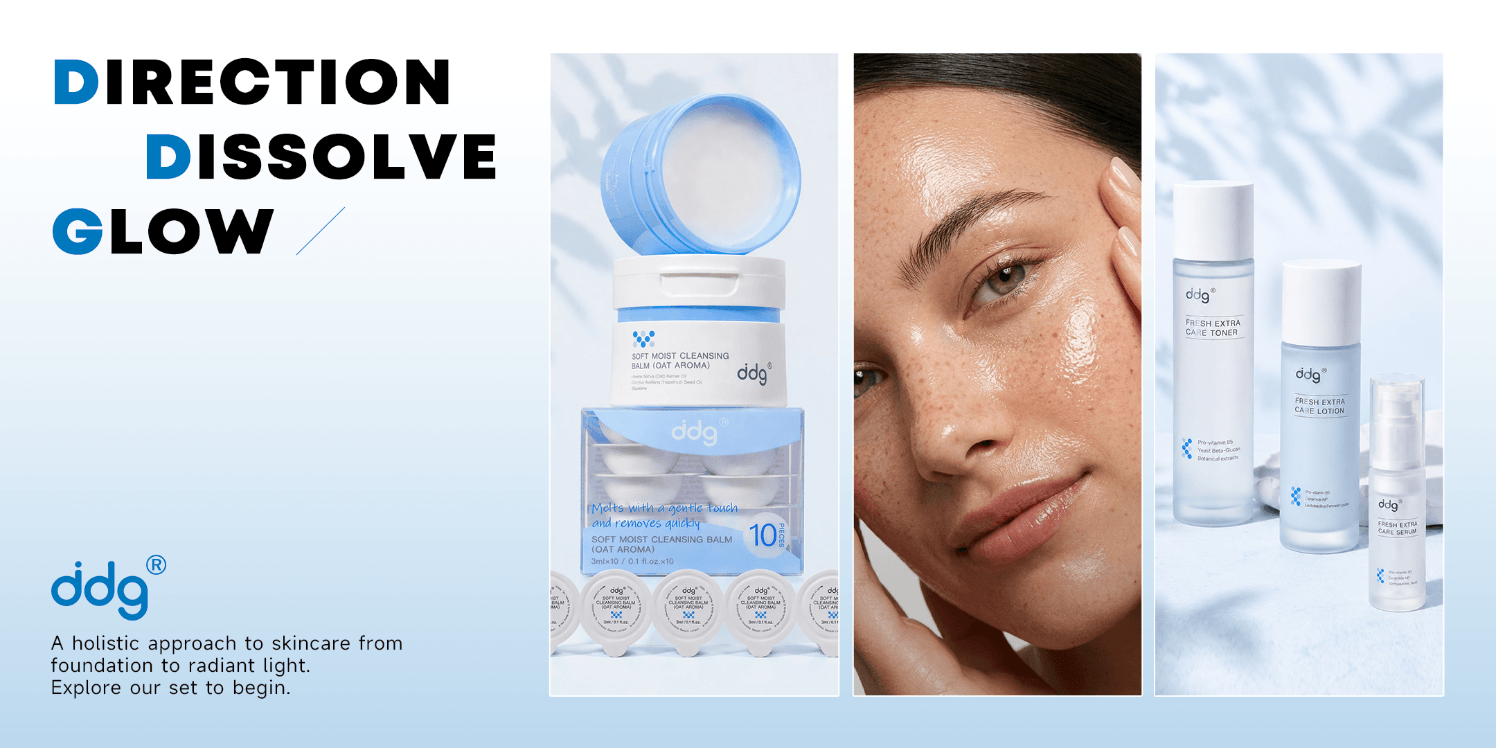
ddg 28-Day Glass Skin Renewal Set
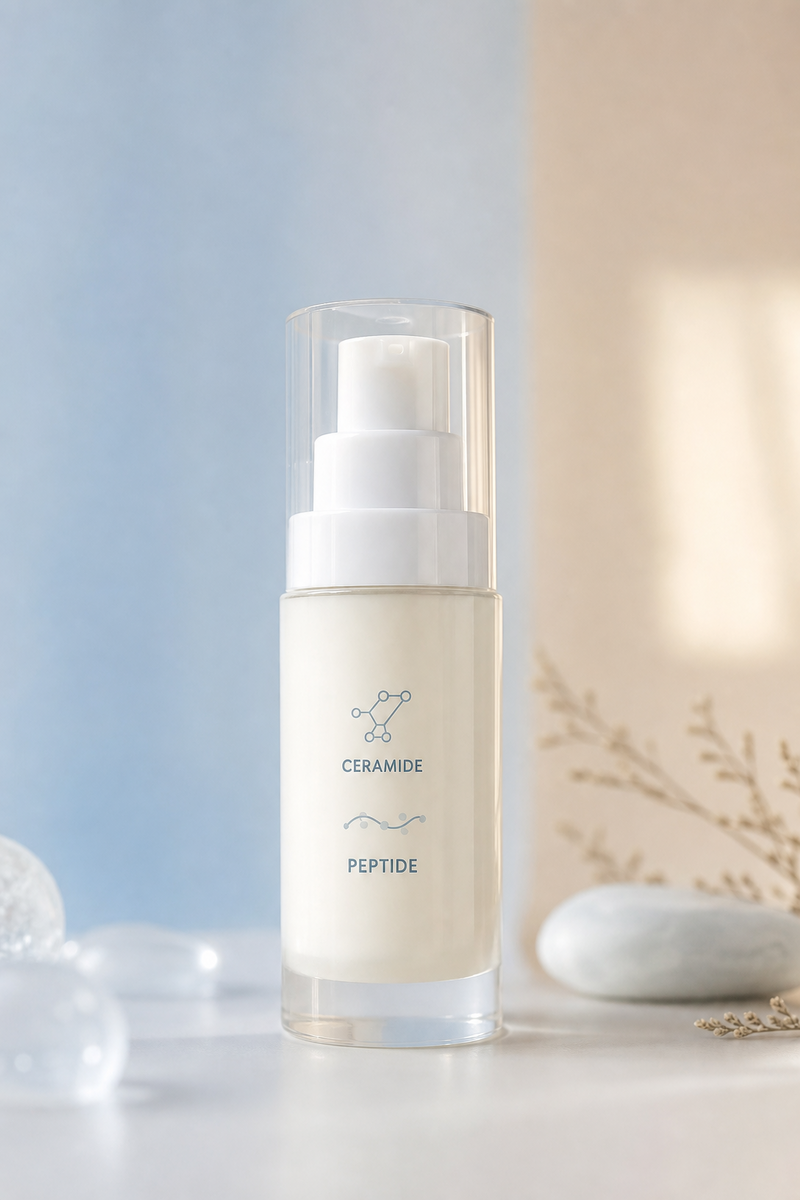
- Ceramide + Peptide + Hyaluronic Acid — the exact barrier-repair trifecta that covers humectant + lipid + emollient in one system
- 15-minute visible calming of redness — ideal for the SOS phase when everything else burns
- Lightweight water-gel textures absorb without heavy occlusives — perfect for oily and combination skin types that dread thick barrier creams
- 4D care: hydrate → lock in moisture → soothe → repair — maps directly to the Phase 2–3 protocol
Barrier Repair by Skin Type
The core principles — stop actives, gentle cleanse, moisturize, protect — are universal. But the textures and specific ingredients you choose should match your skin type:
| Skin Type | Cleanser | Moisturizer Texture | Occlusive? | Key Adjustment |
|---|---|---|---|---|
| Oily | Gel or balm (non-foaming) | Water-gel or light lotion | Skip or use squalane only | Don't skip moisturizer — oiliness increases during barrier repair as skin compensates |
| Dry | Cream or balm (rich, non-foaming) | Rich cream with ceramides | Yes — petrolatum or squalane PM | Layer a hydrating toner under moisturizer for extra water content |
| Combination | Gentle cream cleanser | Light lotion all over; extra cream on dry patches | Dry zones only | Multi-moisturize — different textures for different zones is worth the effort |
| Sensitive / Rosacea-Prone | Balm cleanser (zero foam) | Fragrance-free cream with centella + panthenol | Mineral-oil based if tolerated | Patch test EVERYTHING on your neck for 24 hours before putting it on your face |
How Long Until It's Fixed? A Real Timeline
Barrier repair follows the skin's natural renewal cycle — approximately 28 days for a full epidermal turnover in healthy skin. Here's what to actually expect at each milestone:
| Timeframe | What Should Improve | What Probably Won't Yet | Action If Not Improving |
|---|---|---|---|
| Week 1 | Stinging/burning reduced; tightness easing after moisturizing | Redness, flaking, overall texture | Remove any product that stings. If water stings, see a derm — this may be more than barrier damage |
| Week 2 | Redness 50%+ reduced; flaking diminishing; products no longer sting | Full texture recovery; may still have some sensitivity | Introduce ceramide moisturizer if not already using. Still no actives |
| Week 4 | Smooth texture returning; skin feels "normal" most days; occasional tightness in dry environments | Full resilience — may still react to very hot water or harsh products | Ready for Phase 4: start reintroducing ONE gentle active (azelaic acid recommended) |
| Week 8 | Barrier functionally restored; skin tolerates a normal, non-aggressive routine | Lingering redness from broken capillaries (requires professional treatment, not topical repair) | If still reactive at week 8, the issue may extend beyond barrier damage — consider an underlying condition like rosacea or perioral dermatitis |
Frequently Asked Questions
How do I know if my skin barrier is damaged?
A damaged skin barrier typically shows 6 key signs: your skin stings or burns when applying products that used to be fine, feels persistently tight even after moisturizing, looks red or flushed without an obvious trigger, develops rough/flaky patches you can't smooth away, experiences increased breakouts or sensitivity, and feels dehydrated yet oily at the same time. If you check 3 or more of these, your barrier is likely compromised.
How long does it take to repair a damaged skin barrier?
Repair timeline depends on severity: mild damage (tightness, occasional stinging) typically heals in 2–4 weeks. Moderate damage (persistent redness, flaking, products sting daily) takes 4–8 weeks. Severe damage (everything burns, visible inflammation, broken capillaries) may require 3–6 months. The skin renews its outermost layer approximately every 28 days, so visible improvement usually starts around week 3–4 if you're consistent with a barrier-focused routine.
Can I use any active ingredients while repairing my skin barrier?
No. Stop all active ingredients for at least 2 weeks when repairing a damaged barrier. This includes retinoids (retinol, tretinoin, adapalene), exfoliating acids (AHA, BHA, PHA), vitamin C (L-ascorbic acid), benzoyl peroxide, and physical scrubs. The only exception is niacinamide (4–5%), which actually supports barrier repair by boosting ceramide production. Once your barrier is healed, reintroduce actives one at a time, starting with 2–3x per week.
What's the single best ingredient for barrier repair?
Ceramides are the most important ingredient for barrier repair — they make up approximately 50% of the skin barrier's lipid structure. For optimal repair, look for products containing ceramides in a 3:1:1 ratio with cholesterol and free fatty acids, which mimics the skin's natural lipid composition. Supporting ingredients like niacinamide (boosts natural ceramide production), panthenol (anti-inflammatory and hydrating), and squalane (lightweight emollient that mimics natural sebum) accelerate the healing process.
Should I use sunscreen on a damaged skin barrier?
Yes — sunscreen is non-negotiable, even with a damaged barrier. UV exposure further degrades the barrier and prolongs healing. However, switch to a mineral sunscreen (zinc oxide or titanium dioxide) during repair. Chemical sunscreens (avobenzone, oxybenzone, octinoxate) can sting and irritate compromised skin. Mineral SPF sits on top of the skin rather than absorbing in, making it far more tolerable for a damaged barrier.
Can a damaged skin barrier cause acne?
Yes. A damaged barrier creates a cascade that can trigger acne: compromised barrier → chronic low-grade inflammation → disruption of the skin's microbiome → abnormal sebum production → clogged pores → breakouts. This is why people who aggressively treat acne with harsh products often experience worsening breakouts — they're damaging their barrier faster than it can heal. Barrier repair should be the foundation of any acne treatment plan.
What's the difference between a damaged barrier and just dry skin?
Dry skin is a skin type characterized by underproduction of natural oils (sebum) — it's a chronic condition you're born with. A damaged barrier is an acquired condition where the skin's protective outer layer is compromised, regardless of skin type. Key difference: if moisturizer fixes the discomfort within minutes, it's likely just dryness. If your skin stings when applying products, looks red/flushed, and moisturizer doesn't immediately relieve the tightness, it's barrier damage. Oily skin can have a damaged barrier too — it presents as oily yet tight, shiny yet flaky.
Fixing a damaged skin barrier isn't about finding one miracle product — it's about creating the conditions for your skin to do what it already knows how to do: heal itself. The skin barrier regenerates every 28 days when given the right environment. Your job is to remove obstacles (harsh cleansers, over-exfoliation, unprotected sun exposure) and provide raw materials (ceramides, hydration, protection). The rest is patience. If you take nothing else from this guide, remember the three non-negotiables: gentle cleanse, moisturize on damp skin, mineral SPF every single day. Everything else is optimization.
At ddg, We Believe: Effective skincare doesn't need to hurt. Our 28-Day Glass Skin Renewal Set was formulated on the principle that barrier health is the foundation of all skin goals — whether that's clearing acne, fading dark spots, or simply waking up to skin that feels comfortable in its own barrier. Because calm skin and clear skin aren't opposites. They're the same thing, built from the same foundation.