
Short answer: A simple skincare routine needs three core jobs: cleanse without leaving skin persistently tight, moisturize with a texture you can use consistently, and protect exposed skin with sunscreen during the day. Makeup remover, toner, and serum are optional steps that should earn their place by solving a specific problem.
Key takeaways
- Start with the morning and evening basics before adding specialty products.
- Use makeup remover as a first cleanse when makeup or sunscreen calls for it; it is not automatically an extra step for everyone.
- Add one optional product at a time so you can judge comfort and usefulness.
- A shorter routine used consistently is more useful than a crowded routine you cannot evaluate.
A three-step morning routine
- Cleanse as needed. Some people prefer a gentle cleanser; others with dry or sensitive skin may find a water rinse comfortable. Let skin feel be your guide.
- Moisturize. Use a lotion, gel, or cream that fits your climate and skin feel.
- Protect. Apply a broad-spectrum sunscreen as the final skin-care step and follow its label for amount and reapplication.
Toner or serum can sit between cleansing and moisturizer when it adds something your basic routine lacks. Neither is mandatory because of its name.
A simple evening routine
- Remove what needs removing. Makeup and water-resistant sunscreen may call for a balm, oil, micellar product, or another first-cleanse format.
- Decide whether you need a second cleanse. Follow your first cleanser’s directions and pay attention to residue and comfort. Our guide to double cleansing for sensitive skin explains when the extra step helps.
- Use moisturizer. Apply after any compatible treatment or serum.
If you use a cleansing balm, the technique matters. Start with dry hands and dry skin, add water until the balm turns milky, and rinse thoroughly. See the full cleansing balm steps.
How optional steps earn a place
| Optional step | Keep it when | Skip or reassess when |
|---|---|---|
| Toner | It provides useful hydration or a defined treatment | It duplicates another step or causes tightness |
| Serum | It targets a clear goal and layers comfortably | You cannot explain what it adds |
| Second cleanse | The first step leaves residue or the directions call for it | Extra washing leaves skin persistently dry or irritated |
| Exfoliant | You have a suitable reason, formula, and schedule | You are already using several irritating actives |
A two-week routine check
Write down the products you use in the morning and evening, then remove any step whose purpose you cannot name. Keep the core routine steady for about two weeks unless irritation appears sooner. Note comfort after cleansing, midday dryness or shine, pilling, and whether makeup sits differently. Add only one optional product after that. This is not a clinical trial; it is a practical way to stop several changes from hiding the cause of a problem.
Two ddg paths through the routine
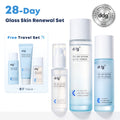
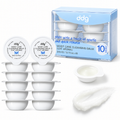
For makeup-removal nights, ddg Cleansing Balm is an in-stock balm-to-oil first cleanser that contains fragrance. Review the full ingredient list if fragrance is one of your triggers. For a coordinated hydration routine, the in-stock 28-Day Glass Skin Renewal Set provides toner, serum, and lotion. You still need a separate daytime sunscreen.
Frequently asked questions
How many products should a beginner use?
Begin with the fewest products needed to cleanse, moisturize, and protect. Add another product only when you can name the job it will do.
Do you need a different routine every morning and night?
The jobs differ slightly: mornings emphasize protection, while evenings emphasize removing makeup, sunscreen, and the day’s buildup. The same moisturizer can often work in both.
When should you see a dermatologist?
Seek professional advice for persistent rash, swelling, pain, cracking, severe acne, or irritation that does not settle after you stop suspected products.
Sources and further reading
- American Academy of Dermatology: skin-care product order
- American Academy of Dermatology: simple gentle-care foundation
- FDA: allergens in cosmetics
This article is educational and does not diagnose or treat a skin condition. Product availability and ingredient lists can change; check the current product page and package before use.

