

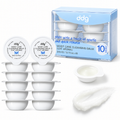
Short answer: Use toner after cleansing and before serum or moisturizer. Dispense a small amount into clean hands and press it over the face, or use a cotton pad if the product directions call for one. Toner is optional: keep it when it adds useful hydration or a clearly defined treatment step, and skip it when it duplicates the rest of your routine or causes discomfort.
Key takeaways
- Toner normally goes after cleansing and before leave-on serums and moisturizers.
- Hands reduce pad waste; a cotton pad can help distribute very watery formulas. Neither method is universally better.
- Do not scrub, drench the skin, or stack several strong toners in one routine.
- Judge a toner by its formula, directions, and how it fits your routine, not by the category name alone.
The basic toner order
- Cleanse. If you wore makeup or water-resistant sunscreen, remove it with a suitable first cleanser and follow with a second cleanse only when your routine needs it.
- Apply toner. Use enough to spread a light layer without dripping.
- Add serum or treatment. Follow the product directions, especially for prescription products or exfoliating acids.
- Moisturize. Choose a texture that leaves your skin comfortable.
- Use sunscreen in the morning. Toner does not replace sun protection.
Hands versus a cotton pad
| Method | Useful when | Watch for |
|---|---|---|
| Clean hands | You use a hydrating toner and want a quick, low-waste step | Pouring too much or rubbing until the skin feels tacky |
| Cotton pad | The directions specify a pad or you prefer controlled application | Abrasive wiping, repeated passes, or using a rough pad |
| Mist | The formula is packaged as a mist and the directions support it | Uneven coverage or assuming every facial mist is a toner |
For sensitive or easily stressed skin, gentle pressing is usually a better starting point than repeated wiping. Avoid the eye area unless the label says the product is intended for it.
When toner is optional
A modern routine can work without toner. If your cleanser is comfortable and your moisturizer provides enough hydration, another watery step may not add much. Toner becomes useful when its specific formula fills a gap: a light hydration layer, a format you enjoy applying, or a treatment that has clear directions and fits with the rest of your products.
If the toner stings, leaves persistent redness, or makes the skin feel tighter, stop. Do not interpret burning as proof that a product is working.
Common toner mistakes
Using more liquid than the skin can comfortably hold often leads to dripping, tackiness, and pilling under the next step. Repeated wiping can add friction. Treating every toner as gentle can also be a problem: some contain exfoliating acids or astringent ingredients and should be used according to their own schedule. Read the label each time you change formulas.
A ddg toner example
The ddg Fresh Extra Care Toner is a fragrance-free hydrating toner with Pro-Vitamin B5 and Yeast Beta-Glucan. Its directions place it after cleansing and before serum and moisturizer. The individual toner is currently unavailable. The in-stock 28-Day Glass Skin Renewal Set includes toner, serum, and lotion for people who want those three steps in one routine.
Frequently asked questions
Should toner go on wet or dry skin?
Follow the product directions. A hydrating toner is often comfortable on freshly cleansed skin, but the face should not be dripping unless the label says otherwise.
Do you rinse toner off?
Most leave-on toners are not rinsed, but some treatment products use different directions. The label decides.
Can you use toner every day?
A simple hydrating toner may be designed for daily use. Exfoliating or active toners can require a different schedule. Start with the directions and reduce frequency if the skin becomes uncomfortable.
Sources and further reading
- American Academy of Dermatology: skin-care product order
- FDA Cosmetics Labeling Guide
- FDA: allergens in cosmetics and label review
This article is educational and does not diagnose or treat a skin condition. Product availability and ingredient lists can change; check the current product page and package before use.

