
Short answer: Topical hyaluronic acid helps a formula attract and hold water near the skin’s surface, which can make skin feel more hydrated and look temporarily smoother or plumper. It is a humectant, not an exfoliant and not an acne treatment. The result depends on the complete formula and the moisturizer or sunscreen you layer after it.
Key takeaways
- Hyaluronic acid is naturally present in the body and is also used in topical skin-care formulas.
- In cosmetics, its clearest role is hydration; it does not permanently fill wrinkles or change facial structure.
- Apply a hydrating serum according to its directions, then use moisturizer and daytime sunscreen.
- Sensitive skin still needs a full-label check because any finished product can contain other potential triggers.
Why hyaluronic acid shows up in so many products
Hyaluronic acid can bind water and is used in serums, lotions, creams, masks, and cleansers. Cosmetic ingredient lists may also use related names such as sodium hyaluronate or hydrolyzed hyaluronic acid. Those names can reflect different forms or molecular sizes, but the front-label phrase “multi-weight” does not tell you everything about concentration, delivery, or real-world performance.
A 2022 review of topical hyaluronic acid described evidence for improved hydration and aspects of skin quality, while also showing that studies use different formulas and endpoints. That is a reason to keep claims specific: a well-formulated topical product may improve the look and feel of dehydration; it is not the same as an injectable filler and does not rebuild facial volume.
How to use a hyaluronic acid serum
- Cleanse gently. Avoid chasing a squeaky feeling.
- Use the serum as directed. A few drops may be enough, depending on the formula.
- Follow with moisturizer. This adds emollient and surface-sealing ingredients that a watery serum may not provide on its own.
- Finish the morning routine with sunscreen. A hydrating serum does not replace sun protection.
If a product pills, try less serum, allow a short pause before the next step, and reduce the number of overlapping layers. More product is not automatically more hydration.
Does skin need to be damp?
Many people like applying humectant serums to slightly damp skin, then following with moisturizer. That can be a comfortable method, but the package directions still come first. A finished formula may be designed for dry or damp skin, and climate affects how a routine feels. The practical test is whether your skin stays comfortable after the full routine.
In very dry air, a light humectant layer may feel insufficient without a lotion or cream. If the serum leaves tightness, stinging, or persistent tackiness, adjust the amount or stop and reassess the formula rather than layering more products on top.
Molecular weight claims need context
Hyaluronic acid is a family of large sugar molecules rather than one identical cosmetic raw material. Brands may discuss high-, low-, or multiple-molecular-weight forms. Size can influence how a material behaves in a formula and where it sits, but a front-label number does not reveal the full formulation, concentration, testing method, or benefit. It is safer to treat “multi-weight” as a formulation detail to investigate, not as a shortcut to ranking products.
The ingredient may also appear as sodium hyaluronate, crosslinked hyaluronic acid, or hydrolyzed hyaluronic acid. Those names are useful when comparing labels, but they do not let a shopper calculate performance from the ingredient list alone.
Topical serum is not injectable filler
Both topical cosmetics and injectable fillers can involve hyaluronic acid, but they are different products used in different ways. A topical serum sits on or near the surface and is used for cosmetic hydration. A filler is injected by a qualified medical professional and carries a separate set of uses and risks. A serum cannot reproduce an injection by “penetrating deeper,” and copy that blurs those categories should be treated cautiously.
How to compare two hyaluronic acid products
First choose the format: watery serum, lotion, cream, or another product you will actually use. Then compare the rest of the formula, including fragrance, other humectants, emollients, and potential irritants you already know about. Check whether the brand publishes finished-formula testing, how the outcome was measured, and whether the claim is about temporary hydration, appearance, or something stronger.
Finally, compare the role in your routine. If your moisturizer already contains hyaluronic acid and keeps skin comfortable, a separate serum may be redundant. If you enjoy a light serum and it layers cleanly under moisturizer, it can be a reasonable optional step.
Where ddg products fit
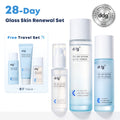
The ddg 28-Day Glass Skin Renewal Set uses a toner-serum-lotion sequence and includes hyaluronic acid, ceramide, and peptide ingredients. The separate ddg Fresh Extra Care Serum is a lightweight, oil-free formula with 4D Hyaluronic Acid and Pro-Vitamin B5; it is currently unavailable, so use the page to review the formula and current availability rather than treating it as an immediate purchase recommendation.
Frequently asked questions
Is hyaluronic acid an AHA or BHA?
No. Despite the word “acid,” hyaluronic acid is not an exfoliating alpha hydroxy acid or beta hydroxy acid.
Can hyaluronic acid replace moisturizer?
A very light routine may feel fine for some people, but a serum and a moisturizer are formulated for different jobs. If your skin feels tight or dry, follow the serum with a moisturizer.
Can sensitive skin use hyaluronic acid?
Many people tolerate it, but tolerance belongs to the complete formula. Review fragrance and other ingredients, introduce one product at a time, and stop if irritation develops.
Sources and further reading
- PubMed: review of topical hyaluronic acid for skin quality
- American Academy of Dermatology: skin-care product order
- FDA Cosmetics Labeling Guide
This article is educational and does not diagnose or treat a skin condition. Product availability and ingredient lists can change; check the current product page and package before use.

