Gentle Double Cleansing for Sensitive Skin: Complete Guide

Gentle Double Cleansing for Sensitive Skin: Complete Guide

Here's exactly how to double cleanse if you have sensitive, reactive, or acne-prone skin — without stripping your barrier, triggering redness, or making your face feel tight. Because the truth is, double cleansing isn't just for heavy makeup wearers. And when done right, it might be the gentlest way you've ever washed your face.

1 Start With Dry Hands and a Dry Face

What: Apply your first cleanser — an oil-based balm — directly onto dry skin with dry hands. No water yet.

Why: Oil-based cleansers work by dissolving oil-soluble impurities: sunscreen, sebum, makeup, and pollution particles. Introducing water too early creates an emulsion that weakens this dissolving power. For sensitive skin especially, you want the balm to do its job efficiently so you can rinse it off quickly rather than scrubbing.

How: Scoop a dime-sized amount of balm onto your fingertips. Gently massage in circular motions across your entire face for 30–60 seconds. Pay extra attention to the T-zone, around the nose, and along the hairline — areas where sunscreen and buildup accumulate. You should feel the balm melt from a solid into a silky oil as it warms against your skin.

Pro Tip: If your skin feels tight or irritated during this step, you're either pressing too hard or using a balm with stripping emulsifiers. A good cleansing balm for sensitive skin should feel cushiony — like you're gliding, not dragging.

2 Emulsify With Lukewarm Water — Not Hot, Not Cold

What: Add a small splash of lukewarm water to your face and continue massaging. The balm will turn milky white — this is the emulsification phase.

Why: Temperature matters more than most people realize. Hot water strips the skin's natural oils and can trigger flushing and redness in sensitive skin. Cold water doesn't effectively rinse oil-based products. Lukewarm water (around 30–35°C / 86–95°F) strikes the balance: it emulsifies the oil thoroughly without shocking your capillaries.

How: Wet your fingertips under lukewarm running water, then bring them to your face and continue massaging for another 20–30 seconds. You'll see the clear oil turn into a white, milky emulsion. This is the signal that the balm has trapped all the oil-soluble debris and is ready to rinse away cleanly.

3 Rinse Thoroughly — Every Last Trace

What: Rinse with lukewarm water until your skin feels clean but not squeaky. Use your hands, not a washcloth.

Why: Washcloths introduce mechanical friction — exactly what sensitive and acne-prone skin doesn't need. Even a "soft" microfiber cloth can cause micro-abrasions when used daily. Residual balm left on the skin is also a problem: it can trap your second cleanser and prevent it from reaching the skin properly, or worse, sit in your pores.

How: Cup water in your hands and splash gently 8–10 times. Run a clean fingertip along your jawline — if it still feels slippery, keep rinsing. Your skin should feel soft and comfortable, never tight.

4 Follow With a Gentle, Low-pH Water-Based Cleanser

What: Apply your second cleanser — a water-based formula — to remove any remaining water-soluble debris like sweat and residual emulsified oil.

Why: The first cleanse removed the oil layer; this second step cleans what's underneath. If you skip this, you're leaving behind the broken-down residue your balm just loosened. But choose carefully: a high-pH foaming cleanser can undo all the gentle work you just did. Sensitive skin thrives with low-pH (5.0–6.0), non-foaming, or cream-based cleansers that respect the acid mantle.

How: Dispense a small amount onto damp hands, lather gently (or not at all if it's a cream cleanser), and massage for 20–30 seconds. Focus on areas where sweat and water-based residue collect: forehead, sides of the nose, chin. Rinse thoroughly with lukewarm water.

Pro Tip: If your skin feels "squeaky clean" after your second cleanser, that's actually a warning sign — it means your cleanser is too stripping. You want "soft clean," not "squeaky clean."

5 Pat Dry and Apply Your Routine Within 60 Seconds

What: Gently pat your face with a clean, soft towel — don't rub. Then move into your skincare routine immediately.

Why: The 60-second window after cleansing is when your skin is most receptive to hydration. Transepidermal water loss (TEWL) begins the moment water evaporates from your skin's surface. Applying your toner, serum, or moisturizer while your skin is still slightly damp locks in that water and amplifies the hydration effect of every product that follows.

How: Use a dedicated face towel — not the one you use for your hands — and replace it every 2–3 days. Pat, don't rub. Think of your skin as a delicate fabric: you blot it, you don't scrub it. Then apply your hydrating toner or essence while your face still feels cool and slightly damp.

Takeaway: Double cleansing for sensitive skin isn't about washing harder — it's about washing smarter. One oil-based step to dissolve, one water-based step to refresh. No scrubbing, no hot water, no tight feeling. Just clean, calm, comfortable skin.

Quick Reference Checklist

  • Dry hands + dry face to start
  • Oil balm massage: 30–60 seconds
  • Emulsify with lukewarm water: 20–30 seconds
  • Rinse thoroughly — no washcloth
  • Gentle low-pH second cleanser: 20–30 seconds
  • Pat dry, apply routine within 60 seconds

Visual Summary — 3 Rules for Sensitive-Skin Double Cleansing:
① Temperature matters: lukewarm water, always.
② Pressure matters: massage, don't scrub.
③ Product matters: a balm that melts, not one that drags.

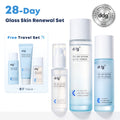
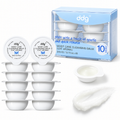
ddg Makeup Remover Cleansing Balm 100ml

ddg Makeup Remover Cleansing Balm

A gentle first-cleanse balm formulated with Korean Oat Kernel Oil and Squalane — melts away sunscreen and makeup in 15 seconds without stripping sensitive skin.

From $11.99 $17.99 Save 33%
Code: WIN10 — 10% off your first order
Shop Now →

Looking for a sensitive-skin-friendly balm? Our cleansing balm guide for sensitive skin breaks down the formula, the melt-down texture, and what to avoid.

How Often Should You Double Cleanse?

For sensitive and acne-prone skin, start with once daily — in the evening. Your PM cleanse needs to remove a full day of sunscreen, sebum, pollution, and possibly makeup. Your AM cleanse can stay simple: just a splash of water or a single gentle cleanser.

After 2–3 weeks of comfortable evening double cleansing, you can consider adding it to your morning routine if you use heavy overnight products. But most sensitive skin types do best with once-a-day double cleansing. Listen to your skin: if you notice redness, tightness, or new breakouts, scale back.

Common Mistakes That Trigger Irritation

Mistake 1: Using a stripping first cleanser. Not all oil cleansers are created equal. Some contain drying alcohols or harsh emulsifiers that leave sensitive skin feeling tight. Look for balms with nourishing oils (oat, squalane, jojoba) and minimal ingredient lists.

Mistake 2: Massaging too long. More than 90 seconds of oil massage can over-stimulate sensitive skin and push debris deeper into pores. 30–60 seconds is the sweet spot.

Mistake 3: Skipping the second cleanse entirely. Some "one-step" oil cleansers promise they rinse completely. In reality, most leave a very fine film. A gentle water-based follow-up ensures nothing stays behind to clog pores or interfere with your treatment products.

Mistake 4: Double cleansing morning and night from day one. Your barrier needs time to adapt. Start with evenings only for at least 2 weeks before considering twice-daily. If your barrier feels compromised at any point, scale back and focus on gentle barrier-supportive care before resuming.

FAQ: Your Double Cleansing Questions Answered

Can I double cleanse if I have rosacea or eczema?

Yes — but proceed with extra caution. Choose a balm with minimal ingredients and zero fragrance. Keep the massage to 30 seconds maximum, use lukewarm water only, and start with once every other evening. If your skin reacts, stop and consult your dermatologist.

Do I need to double cleanse in the morning?

No — for most people, especially those with sensitive skin, morning double cleansing is unnecessary. Your skin only accumulated a small amount of overnight sebum and product residue. A splash of water or a single gentle cleanser is usually sufficient.

What is the best oil cleanser for acne-prone skin?

Look for oil cleansers with non-comedogenic oils like squalane, oat kernel oil, or jojoba oil. Avoid products with coconut oil, palm oil, or isopropyl myristate — these are known to clog pores. Balm textures tend to be gentler than liquid oil cleansers because they require massage to melt, which naturally limits over-application.

Can I just use micellar water instead of double cleansing?

Micellar water can work as a first-cleanse alternative in a pinch, but it is not equivalent. Micellar water relies on surfactants sitting on a cotton pad, which means you are physically wiping — adding friction. For sensitive skin, an oil balm that melts and rinses without cotton pads is typically gentler.

How do I know if my second cleanser is too harsh?

The telltale sign is the squeaky-clean feeling. If your skin feels tight, looks shiny in a pulled way, or stings when you apply moisturizer afterward, your cleanser is too stripping. Switch to a cream or milk cleanser with a pH between 5.0 and 6.0.

Can double cleansing help with closed comedones and texture?

Yes — consistently removing sunscreen, sebum, and pollution buildup can reduce the appearance of closed comedones over 2-4 weeks. However, double cleansing alone won't clear existing texture; it prevents new congestion from forming. For existing bumps, look to gentle chemical exfoliation once your barrier is healthy.

Wrap-Up

Double cleansing doesn't have to be aggressive. When you use a cushiony, oat-oil-based balm like the ddg Cleansing Balm, keep your water lukewarm, and follow with a gentle second cleanser, the entire process takes under three minutes — and leaves your skin feeling softer, not stripped. Ready to start? Your sensitive skin might just thank you for it. For more on keeping your barrier strong, read our guide on skin barrier repair timelines.

At ddg, we believe skincare should be gentle, effective, and backed by real ingredients — not marketing noise. Every product we formulate is designed with sensitive skin in mind, because great skin starts with a calm, healthy barrier. This article is part of our commitment to help you build a routine that works — without the guesswork.