
Short answer: Paid creator posts about ddg Cleansing Balm repeatedly center on three practical situations: removing a full face or creative makeup, making the end-of-day routine easier to complete, and carrying a smaller format while traveling. Those posts describe individual experiences. They do not replace an ingredient check, the product directions, or independent testing.
Collaboration disclosure: The creators discussed here participated in paid ddg collaborations. We link to their public posts and paraphrase what was publicly visible. We do not reproduce their photos or video, and we do not treat a sponsored post as a clinical result.
Key takeaways
- Heavy makeup and end-of-day convenience appear often in creator posts.
- Specific situations are more useful than broad “best product” language.
- A creator’s preference can help you ask better questions, but it cannot predict your skin’s response.
- Partnership disclosure, full ingredient information, and clear directions should sit beside the review.
How we reviewed the creator material
We started with the public post links in our paid creator collaboration records. We used examples only when a public page, platform metadata, or both still identified the post and its topic. Two Instagram examples had observable public playback during our review. Several TikTok examples had public caption metadata, but we did not assume that a caption proved every action or result shown in the full video.
This distinction matters. A public caption can support a statement such as “this post is about full-glam removal.” It cannot establish how much product the creator used, whether the clip was edited, or how the formula performs for every viewer. The post links below let you see the original context.
Theme 1: heavy, full-glam, and creative makeup
The clearest use case comes from creative makeup. In a public Instagram Reel, Hannah Joy removes a stitched broken-heart SFX look with ddg Cleansing Balm. A related TikTok caption names the same SFX removal scenario. The public link and caption support the topic; they do not turn one demonstration into a universal performance claim.
Full-glam language also appears in a TikTok post from Asha G, while fatherrlex frames the balm around a dramatic makeup look. Taken together, these posts show why creators reach for a balm when the removal job involves several layers. They do not tell you whether a separate remover is needed for lash adhesive, prosthetic adhesive, or a pigment that has its own removal directions.
If creative makeup is your main concern, use our step-by-step guide to SFX makeup removal with a cleansing balm. For long-wear eye and lip products, the waterproof makeup guide covers contact time, emulsifying, and gentle rinsing.
Theme 2: a routine people can finish
A public Instagram Reel from Aitan connects the balm with a change in her bedtime habit: she describes moving away from occasionally sleeping in makeup after adding the product. The useful point is behavioral. A cleanser only helps when the routine is manageable enough to repeat.
That does not mean one format solves every barrier to removing makeup. Some people prefer micellar water, a liquid oil, or a two-step cleanse. Others want one jar beside the sink. Compare the format, the directions, the amount of rubbing required, and how the skin feels after rinsing. Our cleansing balm versus cleansing oil comparison explains the practical differences without declaring one format best for everyone.
Theme 3: travel changes the packaging question
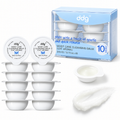
Travel appears as a separate creator use case. Public TikTok metadata for posts from Realll_ida describes a travel-size cleansing balm, and a second post includes both travel-size and partner tags. The post context supports the travel topic and the collaboration disclosure.
Portable packaging can reduce decanting and give each trip a defined amount. It also creates questions about how many uses a pod covers, where to store opened product, and whether your makeup routine calls for a mini jar instead. The travel-size cleansing balm guide compares pods, mini jars, and decanting. The current ddg Travel Size Cleansing Balm page carries the live product details and availability.
How to read a sponsored creator review
| What the post can show | What it cannot prove by itself |
|---|---|
| The makeup style, routine context, package format, and creator’s stated preference | Performance for every makeup formula or skin type |
| How a creator describes the texture or convenience | A diagnosis, treatment outcome, or guaranteed irritation profile |
| A practical question worth testing in your own routine | An independent comparison when the content is a paid collaboration |
Look for a clear relationship disclosure, then separate observation from interpretation. “The post uses the balm on SFX makeup” is an observation. “This will remove every adhesive safely” is a much larger claim and is not supported by the post. Read the current label and ingredient list, patch test when appropriate, and stop if you experience persistent irritation.
The FTC’s Endorsement Guides Q&A explains that a material connection that could affect how people evaluate an endorsement should be disclosed clearly. That is why this page identifies the paid relationship near the beginning instead of leaving it in a footnote.
What to evaluate before you buy
- Your usual makeup: everyday sunscreen, full glam, waterproof mascara, and prosthetic adhesive are different removal jobs.
- Your preferred format: compare a jar, refill, mini jar, or single-use pod around how you actually get ready and travel.
- The rinse step: a balm should be used according to its directions, including the water-emulsifying step when specified.
- Your known triggers: read the complete ingredient list. A creator’s comfort does not predict yours.
- The disclosure: treat a paid post as sponsored personal experience and keep the original link available.
For the current formula, directions, and stock, use the ddg Cleansing Balm product page. For technique, start with How to Use a Cleansing Balm.
Frequently asked questions
Are these independent reviews?
No. The examples come from paid creator collaborations. That relationship is why the article names the sponsorship and links to the original public posts.
Did ddg reuse the creators’ images or video here?
No. This article links to public posts and paraphrases the visible context. It does not embed or republish creator media.
Does a creator demonstration prove the balm will work the same way for me?
No. Makeup formulas, adhesives, technique, skin response, and editing can differ. Use creator content to identify a relevant scenario, then check the product directions and your own needs.
Why include TikTok examples if only caption metadata was reviewed?
The captions establish the public topic and partnership tags. We limit our statements to that evidence and do not claim to have verified every action in the full clip.
Creator posts reflect personal sponsored experiences. Product availability and ingredient lists can change. Check the current product page and package before use.

