
How to Choose the Right Cleansing Balm for Your Skin Type
Cleansing balms have become a skincare staple—but not every balm works for every skin type. Here's how to pick one that cleanses thoroughly without stripping, clogging, or irritating your skin.
📋 In This Guide
- What Makes a Cleansing Balm Different
- Skin Type-by-Type Matching Guide
- Key Ingredients That Make or Break a Balm
- A Balm That Works Across Skin Types
- How to Use a Cleansing Balm Correctly
- Frequently Asked Questions
1. What Makes a Cleansing Balm Different
Unlike foaming cleansers or micellar waters, a cleansing balm is an oil-based solid that melts into a silky oil upon contact with skin. This transformation is what makes it uniquely effective: oils bind to makeup, sunscreen, and excess sebum, dissolving them without disrupting the skin's natural moisture barrier. The right formula rinses clean with water—emulsifying completely so there's no greasy residue behind.
Three qualities separate a great cleansing balm from an average one: emulsification quality (does it turn milky on contact with water and rinse completely clean?), ingredient intentionality (are the oils chosen for skin benefit, not just texture?), and residue profile (does it leave skin soft and balanced rather than greasy or stripped?).
If your skin feels tight after cleansing, your balm is likely too stripping. If you break out in closed comedones within days of switching balms, the formula may not be emulsifying fully—or the oil base simply isn't right for your skin type. Either way, the fix isn't to abandon balms entirely: it's to match the balm to your skin.
2. Skin Type-by-Type Matching Guide
Your skin type determines everything: which oil profile your balm should use, how aggressive the emulsifier system needs to be, and what kind of post-rinse feel you should expect. Below is a practical matching guide based on what each skin type actually needs—not marketing claims.
Oily & Acne-Prone Skin
What you need: A balm that emulsifies completely, leaves zero residue, and uses lightweight, non-comedogenic oils. Avoid balms heavy in coconut oil, palm oil, or mineral oil—these can sit on the surface and trap debris, leading to congestion. The balm should rinse to a clean, matte finish—not a dewy one.
Look for: Squalane, grapeseed oil, or MCT oil as the base. These are molecularly light and unlikely to clog pores. A good balm for oily skin should be one-and-done: no second cleanse required to remove its own residue.
Red flag: Any balm that markets itself as "ultra-rich" or "deep moisture"—these formulas are almost always too heavy for oily zones and will leave a film that traps sebum.
Dry & Dehydrated Skin
What you need: A balm that cleanses without stripping and leaves behind a breathable layer of moisture. You can tolerate richer oils than oily skin types, but you still need complete emulsification—the goal is hydration, not a heavy film.
Look for: Oat kernel oil, sunflower seed oil, or jojoba oil. These mimic the skin's natural lipid profile and support barrier function while cleansing. The balm should rinse to a soft, comfortable finish—your skin should feel nourished, not tight.
Red flag: Tightness within 60 seconds of drying your face. That means the emulsifier is too aggressive, regardless of how nourishing the oils are. The balm is cleansing your natural lipids along with makeup.
Sensitive & Reactive Skin
What you need: The shortest ingredient list possible with proven-soothing oils and zero fragrance—natural or synthetic. Your priority is barrier preservation, not deep cleansing power. Every additional ingredient is a potential trigger.
Look for: Oat kernel oil (clinically proven to calm inflammation), squalane, or chamomile-infused oils. The balm should contain fewer than 15 ingredients total. Patch-test behind your ear for 48 hours before full-face use, even if the formula looks clean.
Red flag: Essential oils, citrus extracts, or "parfum" anywhere on the label. These are the most common triggers for sensitive-skin reactions in cleansing balms—and unlike actives, they offer no skin benefit that justifies the risk.
Combination Skin
What you need: A balanced balm that cleanses the T-zone without dehydrating the cheeks. You're looking for the middle ground—lightweight enough for oily areas, nourishing enough for dry patches. Seasonal rotation often works best: a slightly richer balm in winter, a lighter one in summer.
Look for: Squalane-based balms with a touch of oat oil. The squalane handles the T-zone's oil control needs, while the oat soothes and hydrates drier cheek areas without causing congestion.
Red flag: Formulas with more than 5–6 oils in the base. Complexity increases the odds that one of them won't agree with either your oily or dry zones.
3. Key Ingredients That Make or Break a Balm
Not all oils are created equal—and the emulsifier system matters just as much as the oil base. Below is a practical reference for what to look for and what to avoid, organized by skin benefit rather than trend.
| Ingredient | Best For | What It Does |
|---|---|---|
| Oat Kernel Oil | Sensitive, Dry, All Types | Calms inflammation, supports barrier lipids, deeply nourishing |
| Squalane | Oily, Acne-Prone, Combination | Lightweight, non-comedogenic, mimics skin's natural oils |
| Sunflower Seed Oil | Dry, Dehydrated | Rich in vitamin E and linoleic acid, strengthens barrier |
| Coconut Oil | Very Dry Only | Highly comedogenic for many; use with caution |
| Mineral Oil | Non-Reactive Skin | Effective occlusive but inert; no skin benefit beyond cleansing |
4. A Balm That Works Across Skin Types
Finding one balm that suits multiple skin types is rare—but it's possible when the formula is built around skin-identical ingredients rather than trendy extracts. The key is an oil profile that covers the needs of oily, dry, and sensitive skin simultaneously: lightweight enough for congestion-prone zones, nourishing enough for dry patches, and gentle enough for reactive skin.
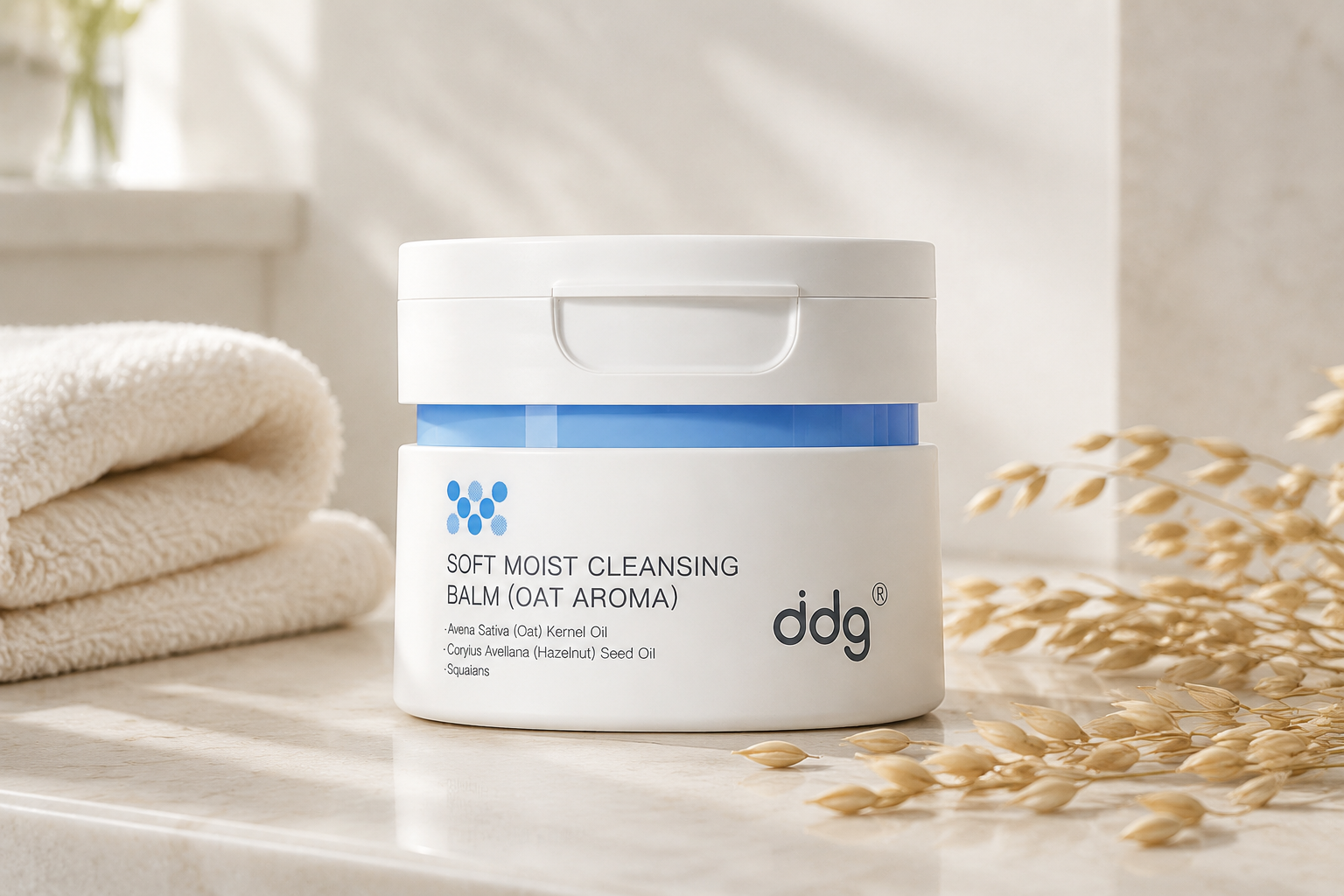
At ddg, we designed our Cleansing Balm around exactly this principle. Here's what makes it work across the board.

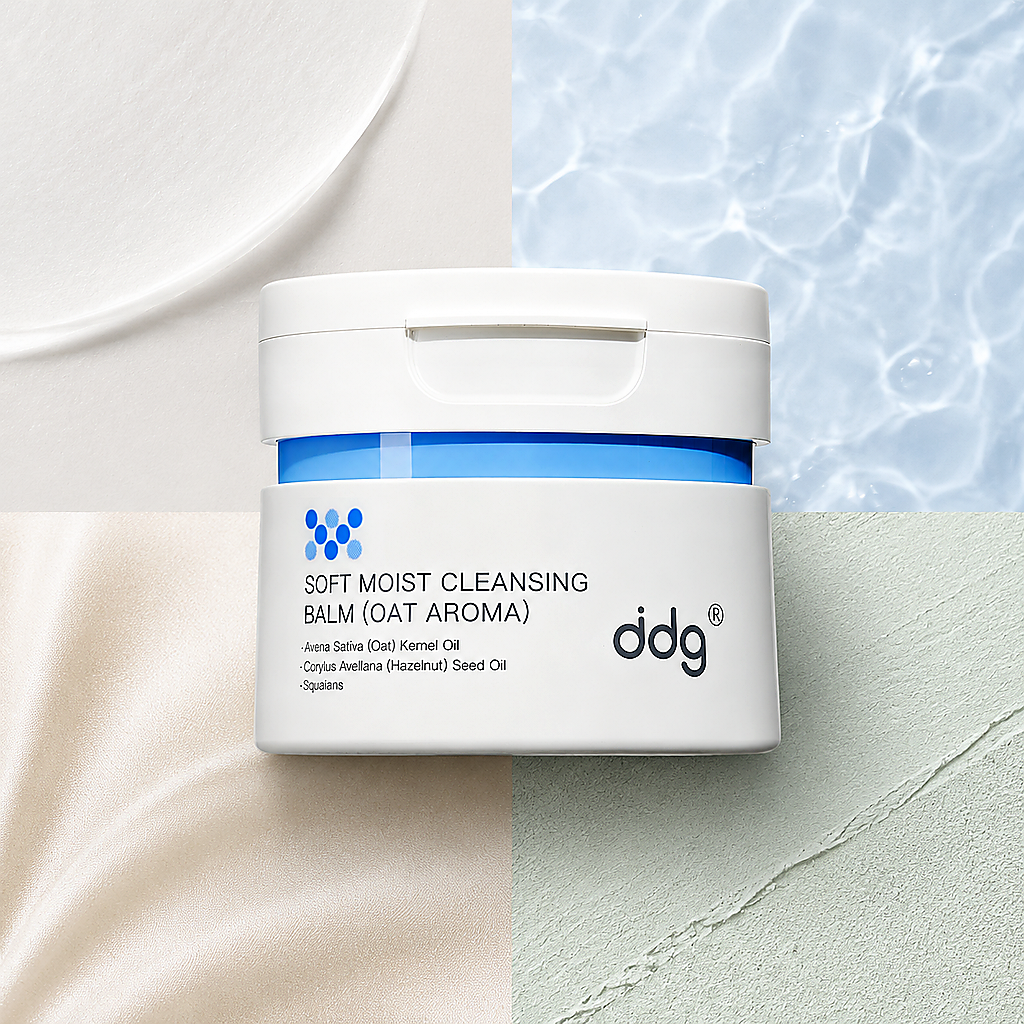
ddg® Makeup Remover Cleansing Balm
Why it works for every skin type:
- Oat Kernel Oil (Korean-origin) nourishes and calms—clinically proven to reduce redness and support barrier recovery. This makes it ideal for sensitive and dry skin without feeling heavy.
- Squalane keeps the formula light and breathable—non-comedogenic, so oily and acne-prone skin can use it without fear of clogging or congestion.
- 15-second emulsification: Turns milky on contact with water and rinses completely clean. No film, no double-cleanse required—a true one-and-done for all skin types.
- Magnetic spatula keeps the jar hygienic—no dipping fingers into product, which is especially important for acne-prone users.
- No added fragrance: just a light, natural oat scent from the oat kernel oil itself. No essential oils, no synthetic parfum—a critical detail for sensitive and reactive skin.
5. How to Use a Cleansing Balm Correctly
Even the best balm underperforms if the technique is off. Here's the method that maximizes cleansing power while minimizing irritation:
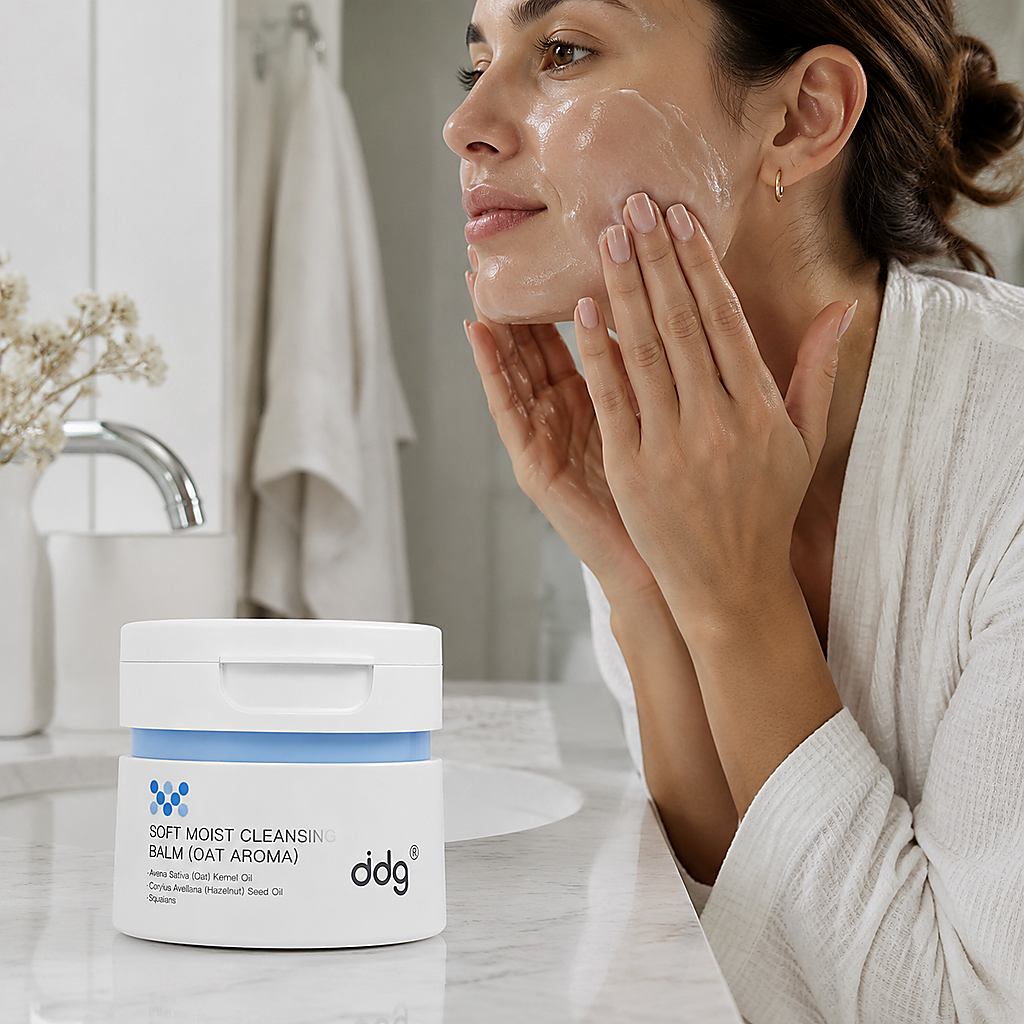
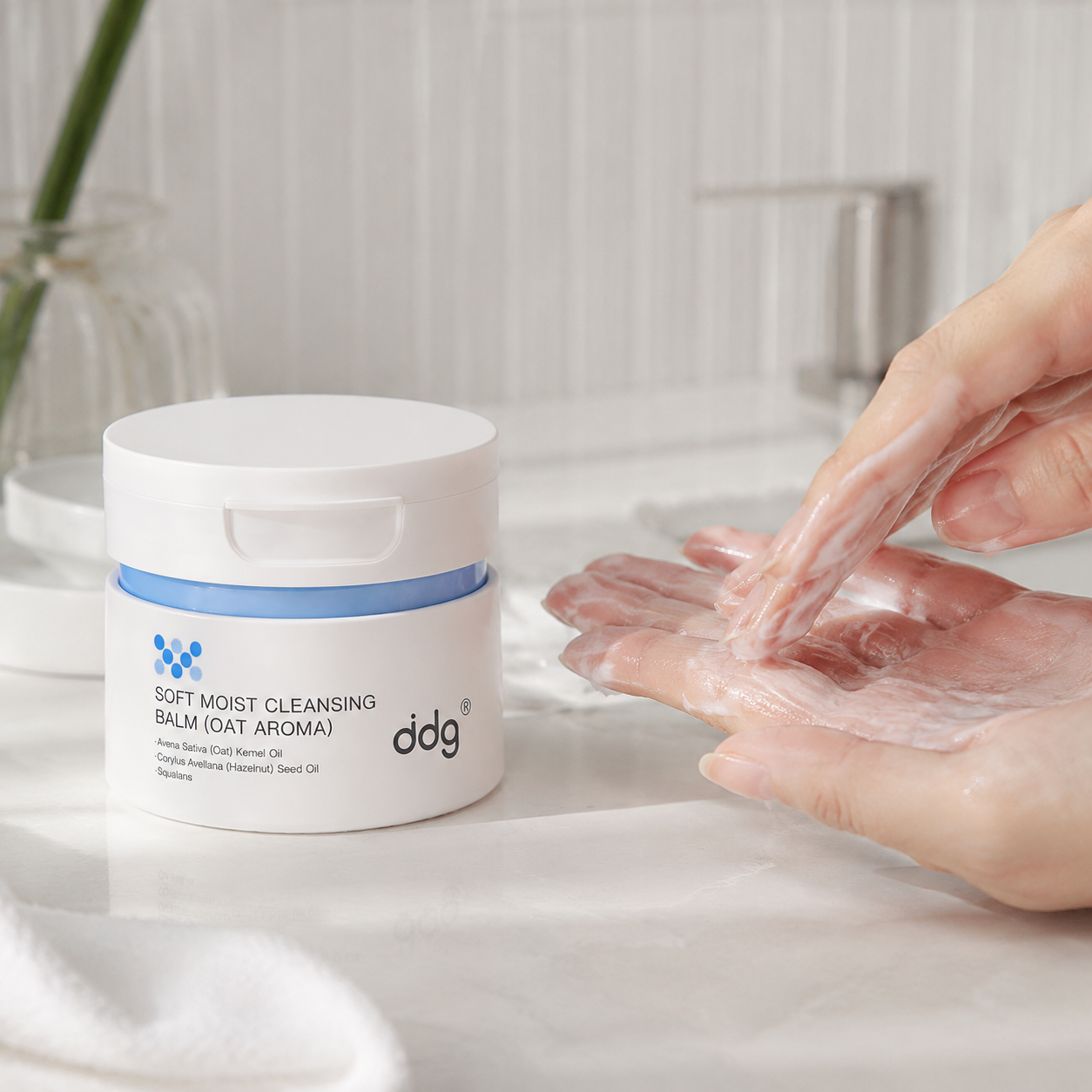
- Scoop a dime-sized amount with the spatula—not your fingers. Warm between dry palms for 5 seconds until it melts into a silky oil. The warmth helps the oils spread evenly and begin dissolving makeup and sunscreen on contact.
- Massage onto completely dry skin in gentle circular motions for 30–60 seconds. Focus on areas with heavy makeup, sunscreen, or visible oil—around the nose, chin, and hairline. The balm will dissolve everything without any scrubbing or pulling.
- Wet your hands with lukewarm water and continue massaging. This is the critical emulsification step: the balm will turn milky white as water binds to the oils and lifts debris off your skin. Use enough water to see the full milky transformation.
- Rinse thoroughly with lukewarm water—splash generously rather than wiping with a cloth, which can be abrasive. Pat dry with a clean towel. Your skin should feel soft and comfortable—not tight or greasy.
- Follow with the rest of your routine: toner, serum, moisturizer. The balm has cleansed without stripping your barrier, so your skin is primed to absorb the active ingredients that follow.
6. Frequently Asked Questions
Do I need to double-cleanse after using a cleansing balm?
Not if the balm emulsifies completely. A well-formulated balm that rinses to a clean finish is a complete first-cleanse—and for most people, the only cleanse needed in the evening. If you wear heavy, waterproof stage makeup, you may want to follow with a gentle water-based cleanser as insurance. But test the balm alone first: you might be surprised how thorough a single well-emulsified cleanse can be.
Can I use a cleansing balm if I have acne-prone skin?
Yes—if you choose the right one. The concern with balms and acne isn't the format itself; it's the specific oil profile and emulsifier quality. Look for non-comedogenic oil bases (squalane, grapeseed, MCT) and avoid coconut oil, palm oil, and isopropyl myristate. The emulsification quality is especially important for acne-prone skin: any residue left behind can trap bacteria and sebum, turning a cleansing step into a breakout trigger.
How often should I use a cleansing balm?
Once daily, in the evening, is the sweet spot for most people. This removes sunscreen, makeup, and the day's accumulation of oil, pollutants, and environmental debris. In the morning, a water rinse or gentle cleanser is usually sufficient—your skin hasn't accumulated enough overnight to warrant a full balm cleanse, and over-cleansing can disrupt your barrier even with a gentle formula.
Why does my cleansing balm leave a film?
Two possible causes: either the emulsifier system is weak and doesn't fully turn the oils water-soluble, or you're not using enough water during the rinse step. Try adding more lukewarm water and massaging for an extra 10 seconds before rinsing. If the film persists after two attempts, the balm's formula is the problem—not your technique. Switch to a balm with a stronger emulsifier system.
Is oat kernel oil better than regular oat oil?
Oat kernel oil is extracted from the inner kernel (groat) of the oat grain, where the highest concentration of lipids, ceramides, and antioxidants lives. It's richer in barrier-supporting compounds than oat bran oil or generic "avena sativa oil." If you see "oat kernel oil" specifically on an ingredient list, you're getting the most concentrated, clinically-backed form of oat's calming and nourishing benefits.
Can I use a cleansing balm around my eyes?
Yes, and it's one of the format's biggest advantages. Oil-based balms dissolve eye makeup—including waterproof mascara—without the rubbing and tugging that cotton pads and micellar water require. Look for a balm that's ophthalmologist-tested and free of essential oils and synthetic fragrance, which can migrate into the eye and cause stinging. Apply gently to closed eyes, massage for 10–15 seconds, and let the emulsification step lift everything away before rinsing.
If you enjoyed this guide, you might also like our Simple Skin Barrier Routine for Overwhelmed Skin—a practical step-by-step for anyone starting from scratch.